Your Business Processes Do Not Live Where You Think
The systems hold the data. The flow between them holds the process. And right now, only one person in your company is reading it.
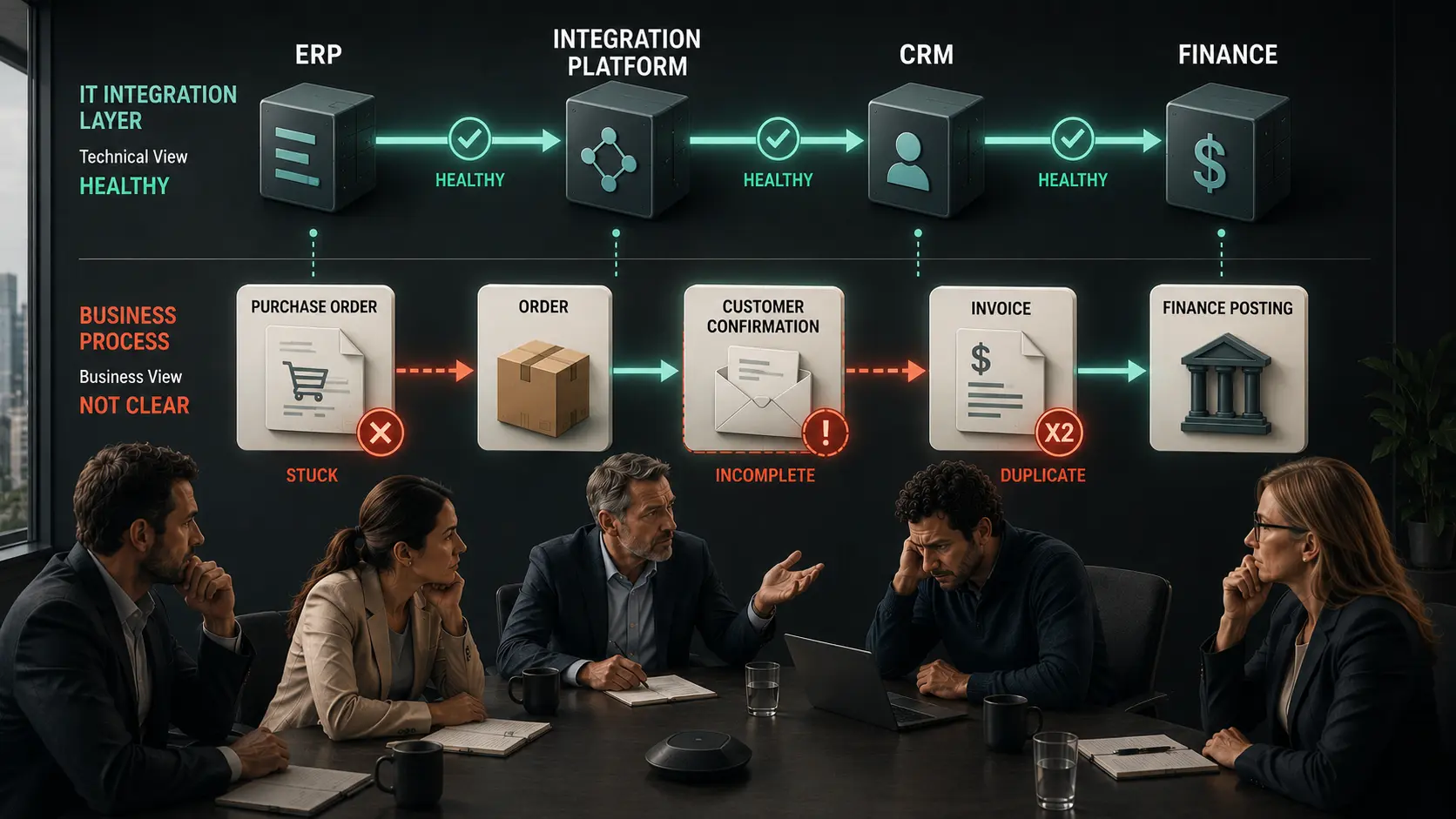
Picture an audit prep meeting. A quarter-end number did not balance, and the audit team wants to know why. IT pulls up the dashboard. Every connection green. Every endpoint healthy. Latency well inside the agreed range.
Then someone asks a different question.
“What business process broke when that system went down on the 14th? Which orders were affected? Which customers? Which postings?”
Silence.
The team can tell you the connector restarted at 14:22 and recovered by 14:31. They cannot tell you which purchase orders were mid-flight, which customers got half a confirmation, or how many invoices posted twice when the retry kicked in. The technology was fine. The business view was missing.
That silence is the whole point of this article.
1. The process is not in the app
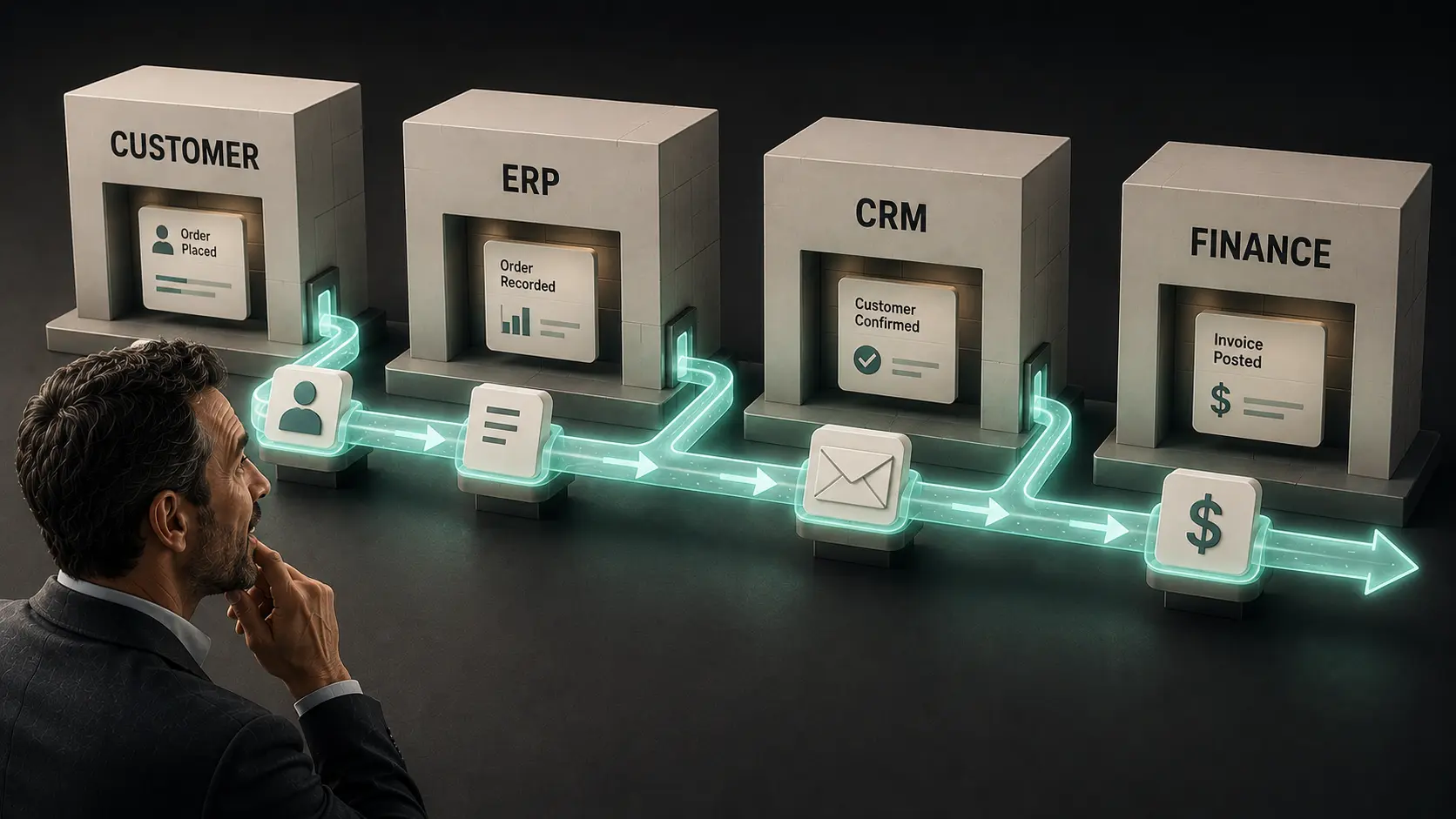
We tend to say a purchase order is “in the ERP.” Or “in the warehouse system.” Or “in the customer portal.”
It is not really in any of them. It is in the flow between them.
Order-to-cash does not sit inside one application. It is the conversation between applications.
Procure-to-pay is the same.
Patient admit to discharge is the same.
The real process is the handoff, the message, the moment one system passes work to the next.
That flow runs through your integration layer. Which leads to a simple, slightly strange conclusion.
If you want to see your business processes as they actually run, end to end, in real time, the integration layer is the best place to look.
That sounds like a marketing line.
It is not.
It is just a description of where the data is.
The layer that carries the traffic is the layer that sees the process.
No other system has the whole picture, because no other system sits in the gaps.

2. The sensor with only one reader
Here is a way to picture it.
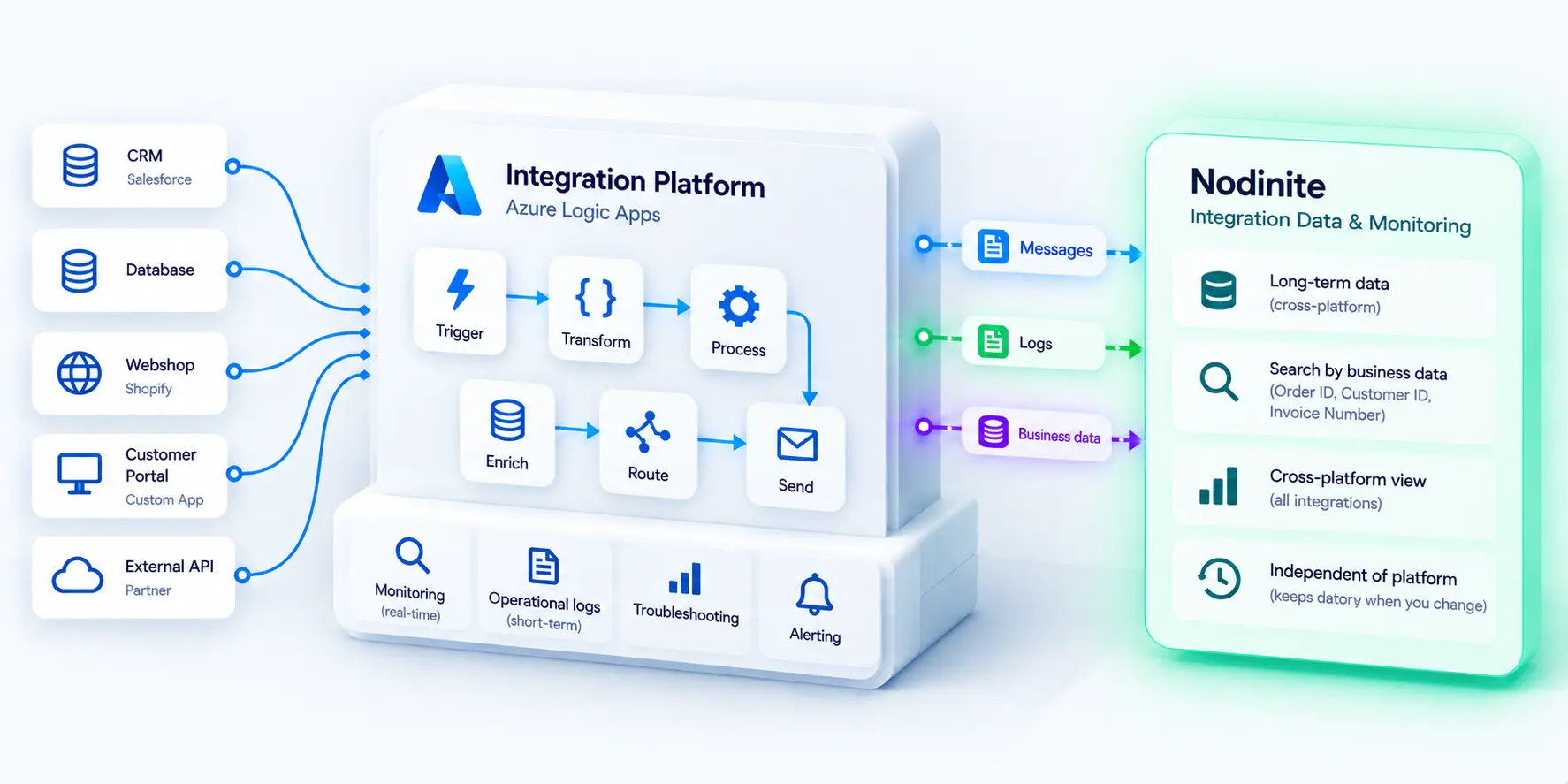
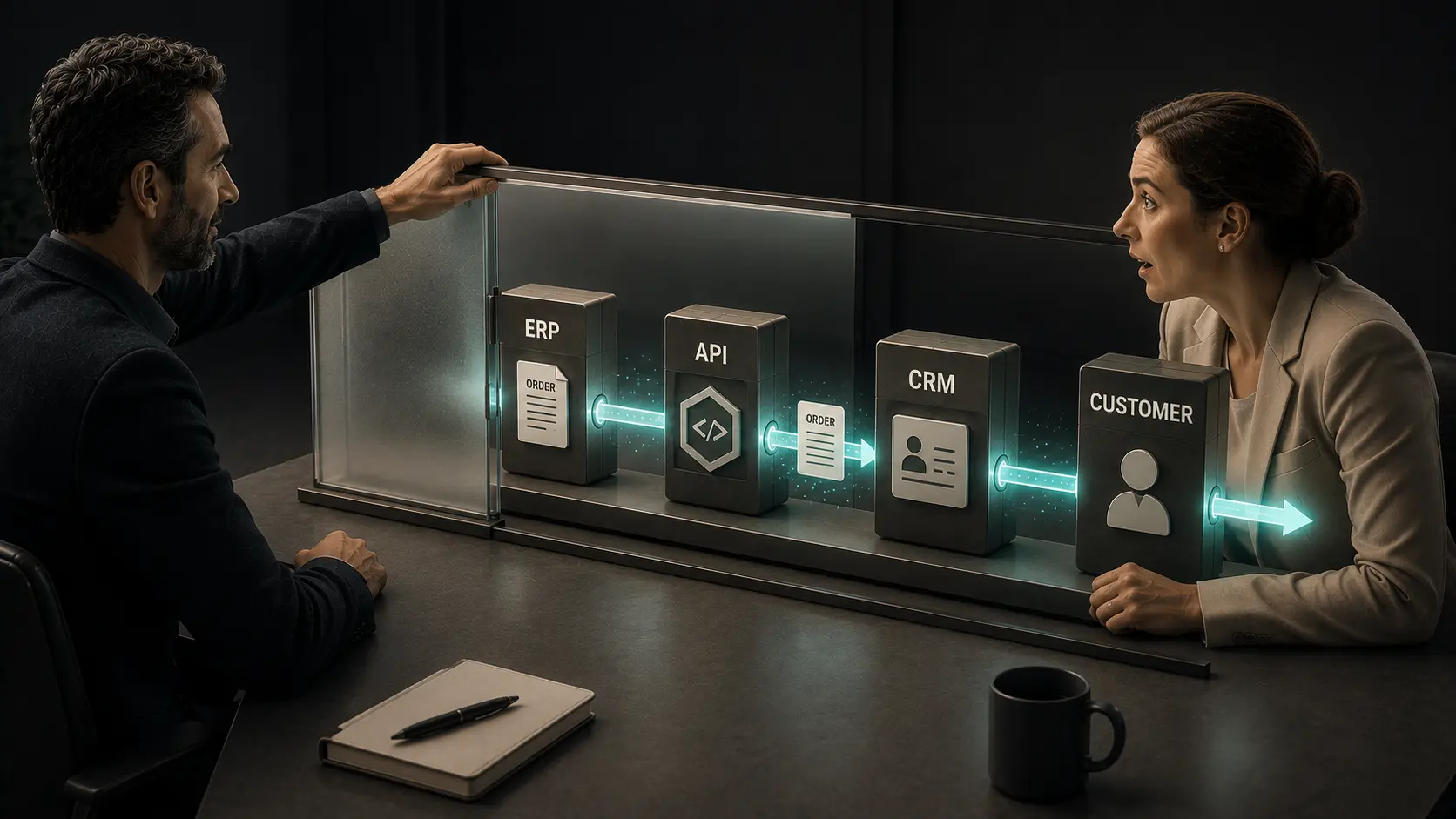
Your integration layer is already a sensor.
It is wired into every cross-system handoff in the business.
The sensor exists. It has been running for years.
The real question is not whether it exists. The question is who reads it.
For a long time, only one person did. The integration architect. And the sensor was asked exactly one question, over and over:
“Is the connection healthy?”
That is a good question. It keeps the lights on. But it is not the only question the sensor can answer. It is just the only one anybody thought to ask.
Meanwhile, other people in the building are asking questions the same sensor could answer, and getting nothing.
The process owner whose phone rings when an order goes missing, who has to borrow IT’s eyes every single time.
They do not need technical status. They need to know which orders are stuck, which are at risk, and what it means for the customer.
The controller who gets asked every month whether integration is a risk for the financial close, and answers with stories instead of numbers, because stories are all they have.
The audit lead who spends six weeks each year hand-building evidence of which transaction touched which system and when, from a layer that already holds that trail.
The operations leader with a green dashboard on the screen and a ringing phone in their pocket, unsure which one to believe.
None of these people were excluded on purpose. The view was simply never built for them. The reading device was made for one reader, so one reader is all it ever had.
3. The one habit that changes it
You do not fix this with a bigger budget or a new tool. You fix it by adding the second reader.
The second reader is anyone outside IT who would make a better decision if they could see what the integration layer already sees.
Naming that person is most of the work. Here is a test you can run in five minutes, on your own, before your next ops review.
The Second-Reader Test
1. Pick one process: One cross-system flow you care about. Order-to-cash. Procure-to-pay. Service request to resolution. Just one.
2. Name the reader: Who, outside IT, would benefit if they could see that process move across your systems in real time? Write down a real name, not a role.
3. Check the view: Do they have that view today? Yes or no.
If the honest answer to step three is “they would benefit, and no, they do not have it,” you have found the gap.
Almost everyone who runs this test finds it on the first try.
You do not need a big dashboard to close it.
The evidence already lives in the systems your team runs.
The work is deciding to surface it, in the language of the person who needs it, before the day something breaks in public.

4. What tends to happen next
When the second reader shows up, the change is quiet but real.
At a large construction group, the same operational view is now read right across the business, most of its readers sitting outside IT.
The integration team stopped being the help desk for “did this go through.” It became the function the business asks first.
The platform did not change in either case. The number of readers did.
And this holds whatever you run on. Cloud, on-premise, a hybrid estate, a partner running it for you, one platform or several stitched together.
The principle does not care about the stack. The choice of tools is yours to make.
Adding the second reader is the part that changes the conversation.

5. The question worth sitting with
So go back to that audit meeting. The silence was not a technology failure. Every connection really was green.
The failure was that the sensor had one reader, and the person asking the question was not it.
The sensor already exists. It is already watching every process you depend on. The only thing missing is a second set of eyes.
Take the test this week.
Pick one process.
Name one person outside IT who should be reading it.
Then ask them a single question: if you could see this the moment it moved, what would you do differently?
Their answer will tell you more about your next audit, your next close, and your next ops review than any dashboard ever has.