Most Integration Estates Are Barely Documented. It Is Nobody’s Fault.
The real risk was never the gap itself. It is that the gap is invisible, and invisible risk is the kind you stop managing.

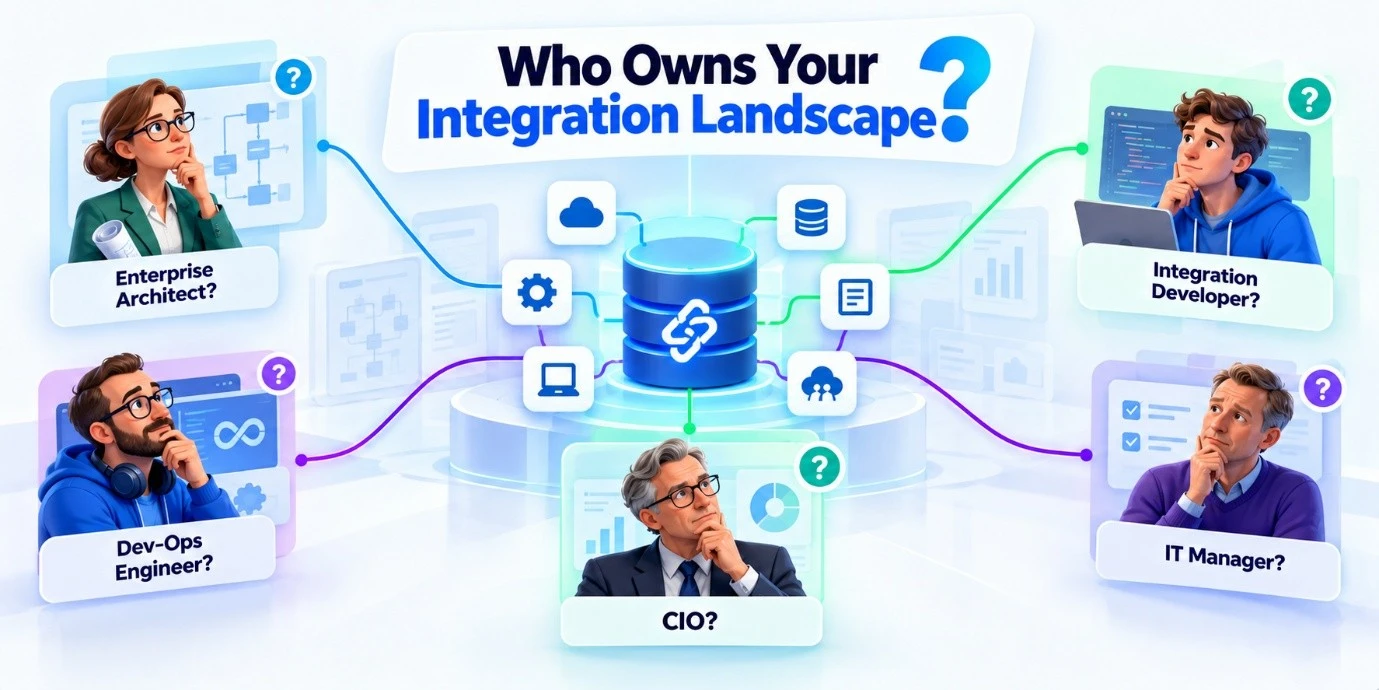
“How many integrations do we actually run?”
It is a simple question. In most planning meetings, nobody in the room can answer it.
You know the major platforms. You know the flows that page you at night. But a full, current list of every integration in the business? That list rarely exists.
The one a project team stood up three years ago. The one a partner built and handed over before they rolled off. Those are on no list at all.
Not because anyone was careless.
Because nothing was ever built to keep the list.
When teams stop and count, the number surprises almost everyone. Only a small slice of what runs in production is written down anywhere.
One specialist who has seen many estates put it starkly: in some organisations it could be as little as only about one percent.
Whether it is one percent or a few percent, the shape is the same. Most of what runs is invisible on paper. And it is nobody’s fault.

1. The gap is almost universal, and that is why it is easy to miss.
If you run integrations for a living, you probably felt a small, quiet recognition reading that. Not alarm. Recognition.
A near-empty inventory is not a sign of a careless team. It is the math you get when integrations are built faster than anyone can record them by hand.
Here is the part that matters for how you manage it. When a gap is this widely shared, it stops registering as a gap at all.
The estate runs. Orders move. Nothing is obviously broken. So the gap turns invisible. And invisible risk is the kind nobody is actively managing, because no one is looking at it.
That is the real exposure. Not the documentation you are missing. The fact that the missing documentation has become easy not to see.

2. It is not a discipline failure. It is inherited blindness.
It is tempting to read a low number as a verdict on a team. It is not. The gap is structural, and it is almost everywhere.
Integrations get built under deadline. The job is to make the data move between two systems. The moment it moves, the project closes.
Documentation is the thing everyone agrees matters and nobody is paid to finish. Then the people who built it move on. The partner rolls off. The knowledge leaves with them.
Multiply that across many years and several platform generations. You get an estate that grew far faster than anyone’s ability to record it.
This deserves a name, because naming it changes what you do about it. It is not negligence.
It is inherited blindness.
A structural condition you took on, the way a new owner inherits a building with wiring nobody mapped.
You did not create it. You inherited it from how integration work has always been done.
And like any inherited condition, you do not fix it by feeling guilty. You fix it by deciding to stop carrying it forward.
Inherited blindness has one defining trait: it is invisible to the person who has it.
The estate runs. Nothing looks broken. So the blindness feels like calm.
That is exactly why it is so easy to live with. Widely shared does not mean safe. It just means well hidden.

3. Inherited blindness has a price, and your best people pay it.
The cost is not a dramatic outage. It is a steady tax on every decision, paid in surprises.
Teams who track it report a lopsided split. Building a new integration might take a day of real work. Finding where the data lives, which systems it touches, and who owns the pieces can take several times longer than the build itself.
That ratio never shows up as a line item. It shows up in other ways.
As the project that runs a month longer than it should. As the senior architect who is the only person who understands a flow, and therefore can never quite go on holiday.
As the meeting that exists only to work out whose problem a failed transaction is.
The tax is large. And it is paid by the people you can least afford to spend on archaeology.

4. Three questions the business will eventually ask.
The daily tax is the part you feel. The part that reaches the board is sharper. A blind estate answers none of these three.
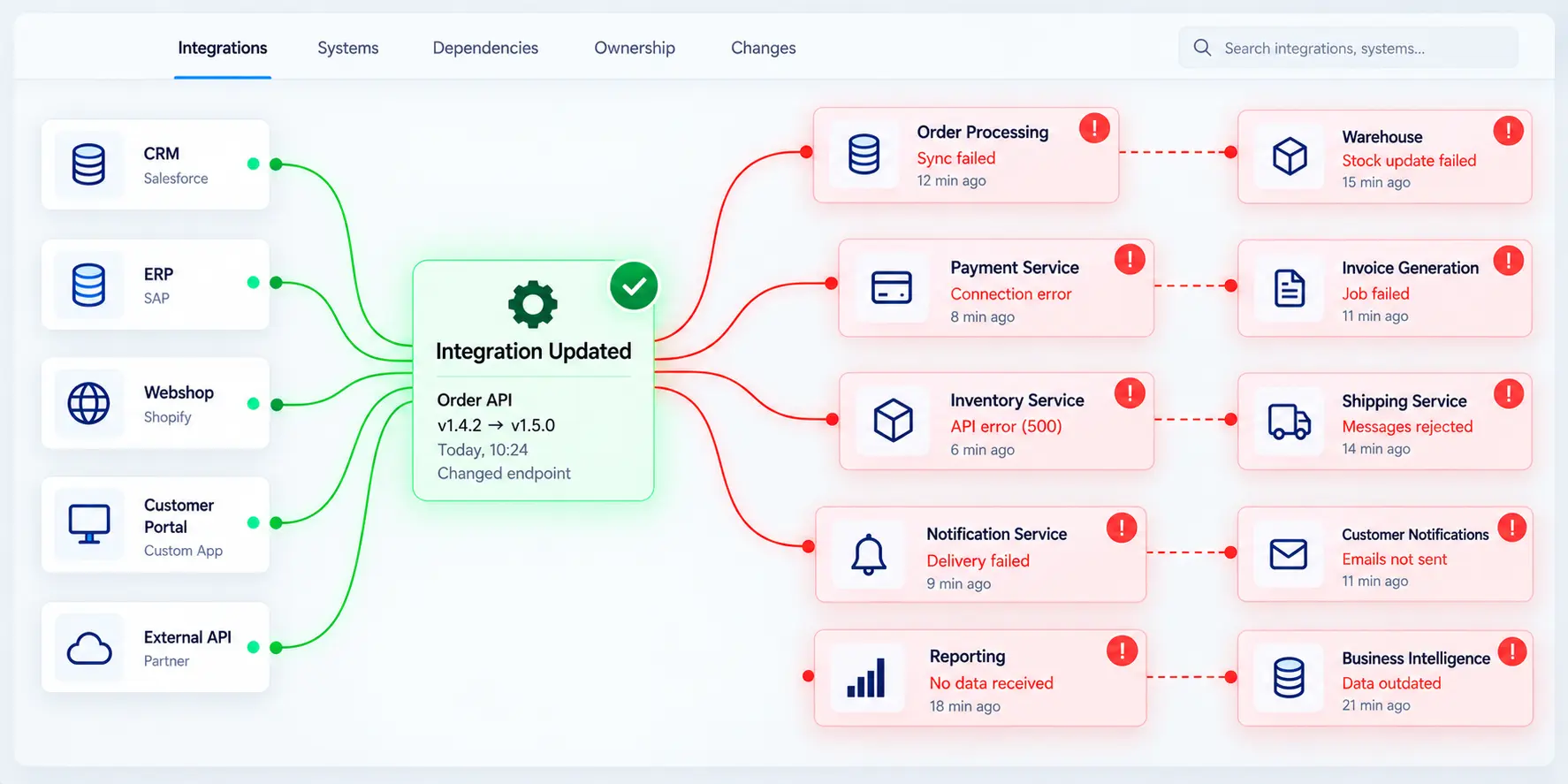
Can we move it? Every team facing a platform sunset hits the same wall.
You cannot migrate what you cannot find.
Plans built on a partial inventory slip, because the surprises are exactly the integrations nobody remembered.
For an older platform, there is often nothing written down at all. The migration does not start with code. It starts with archaeology.
Can we prove it is safe? Audit and compliance frameworks now ask a direct question: show us your data flows.
NIS2, ISO 27001, GDPR, DORA.
“We have most of them, somewhere” does not survive an auditor.
An integration you cannot see is a risk you cannot price. In a healthcare or financial setting, that is not a paperwork gap. It is an exposure.
Can we cost it? You cannot allocate spend, plan capacity, or make a clean build-versus-buy case for a part of the estate you cannot list.
Any cost comparison is an incomplete sentence if you do not know what you are running in the first place.

5. You will not cure it by writing harder.
Almost every team has tried the manual fix. A documentation sprint. A fresh spreadsheet. A wiki everyone promises to keep current.
It works for about a quarter. Then it does not.
The reason is honest and human. Given the choice, most teams would rather build integrations than catalogue them.
Typing an estate in by hand is an enormous job. It is never finished. And the moment it is finished, it is already out of date, because the estate kept changing while you typed.
The inventory you fought to build becomes the stale list everyone quietly stopped trusting.
The entry from two or three years ago that everyone knows is wrong but nobody has time to correct.
Manual documentation does not fail on discipline. It fails because it asks people to hand-maintain a picture of something that changes faster than they can write.
That is a losing race by design. You do not win a losing race by running harder. You change the race.

6. The cure is not a better map. It is an estate that describes itself.
The teams that have order over their integrations did not out-discipline everyone else. Past a few hundred integrations, no amount of discipline keeps a hand-written list current.
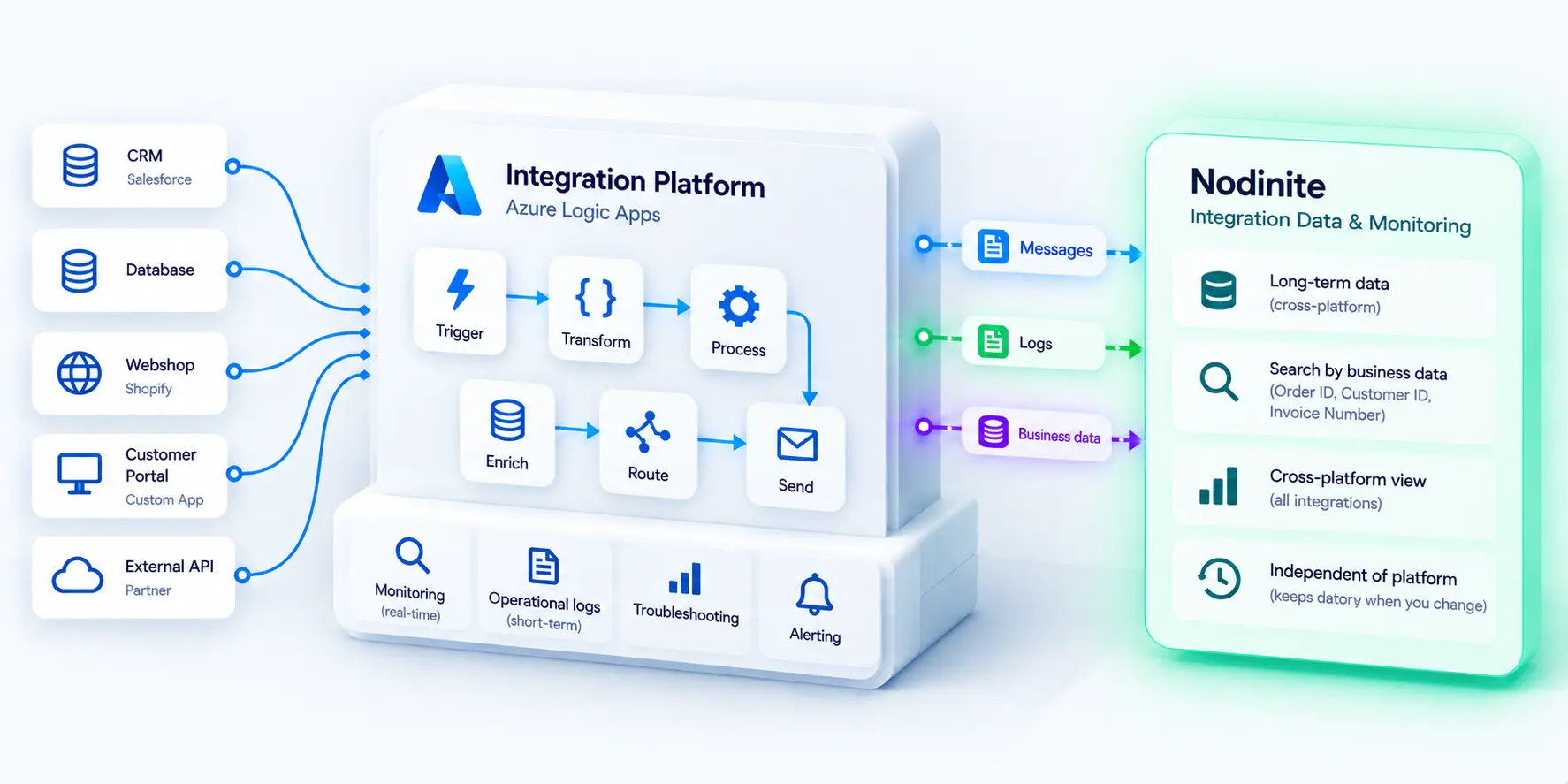
So they stopped trying to keep the list by hand. They let the estate keep it for them.
That sounds abstract, so here is what it actually means. It is not magic, and it is not a bigger spreadsheet. It works in three moves.
How an estate describes itself:
1. Read from the running system, not from memory.
The record is pulled from the integrations that are actually live. It starts out true, instead of starting out as somebody’s best recollection.
2. Update on change, not on a calendar.
When a flow is added, moved, or retired, the picture changes with it. No sprint. No reminder. No quarterly catch-up that never happens.
3. Make the live picture the source, not a copy.
People read the running view instead of a document that drifts away from reality. There is nothing to fall behind, because there is no second copy to maintain.
That is the shift that closes the gap for good.
The estate remembers itself, continuously, instead of waiting for a person to describe it once and fall behind forever.
Two things make it stick.
First, a rule: if an integration is not documented, it does not go to production.
No exceptions.
That moves documentation from “when we get time” to “part of done.”
Second, the self-describing record above is what makes that rule survivable, because nobody has to type to satisfy it.
When it put this kind of self-describing visibility in place, the work paid for itself within three to four months.
You can do this with any approach that builds the record from the running system rather than from a person’s memory.
The point is not just the tool. Even if you obviously need the right systems and tools to accomplish this.
The point is even more the principle.
Stop asking people to remember the estate. Make the estate remember itself.

7. You did nothing wrong. The discipline was simply never named.
If you have been carrying a barely-documented estate, hear this plainly.
You are not a sloppy team. You are the steward of a system that grew faster than anyone, anywhere, could record by hand.
The blindness was inherited, not earned. Nobody named the discipline, so nobody could be held to it.
Which is why naming it now is an act of leadership, not a confession.
The teams who closed the gap are not smarter than you. They simply decided that “we cannot see most of what we run” was no longer an acceptable answer for a system the whole business depends on.
Then they built a way to keep seeing without paying for it by hand.

8. The figure is the same for both teams. The decision is not.
On one side are the teams who treat a near-blind estate as a fact of life. Something to live with, nothing to be done.
On the other are the teams who treat it as a decision they are now making on purpose.
The blindness is identical. The only difference is whether you have chosen to keep carrying it.
You do not close the gap in a sprint, and you should not try.
Do one thing this week.
Pick your most critical business flow. The one that would hurt most if it failed.
Ask a plain question: do we have a full, current picture of it, end to end?
Not most of it. All of it.
If the answer is no, you have just found your first priority. And you have just felt your inherited blindness for yourself.
You cannot manage what you cannot see. So stop trying to see harder. Build an estate that shows you, and never make yourself look the hard way again.