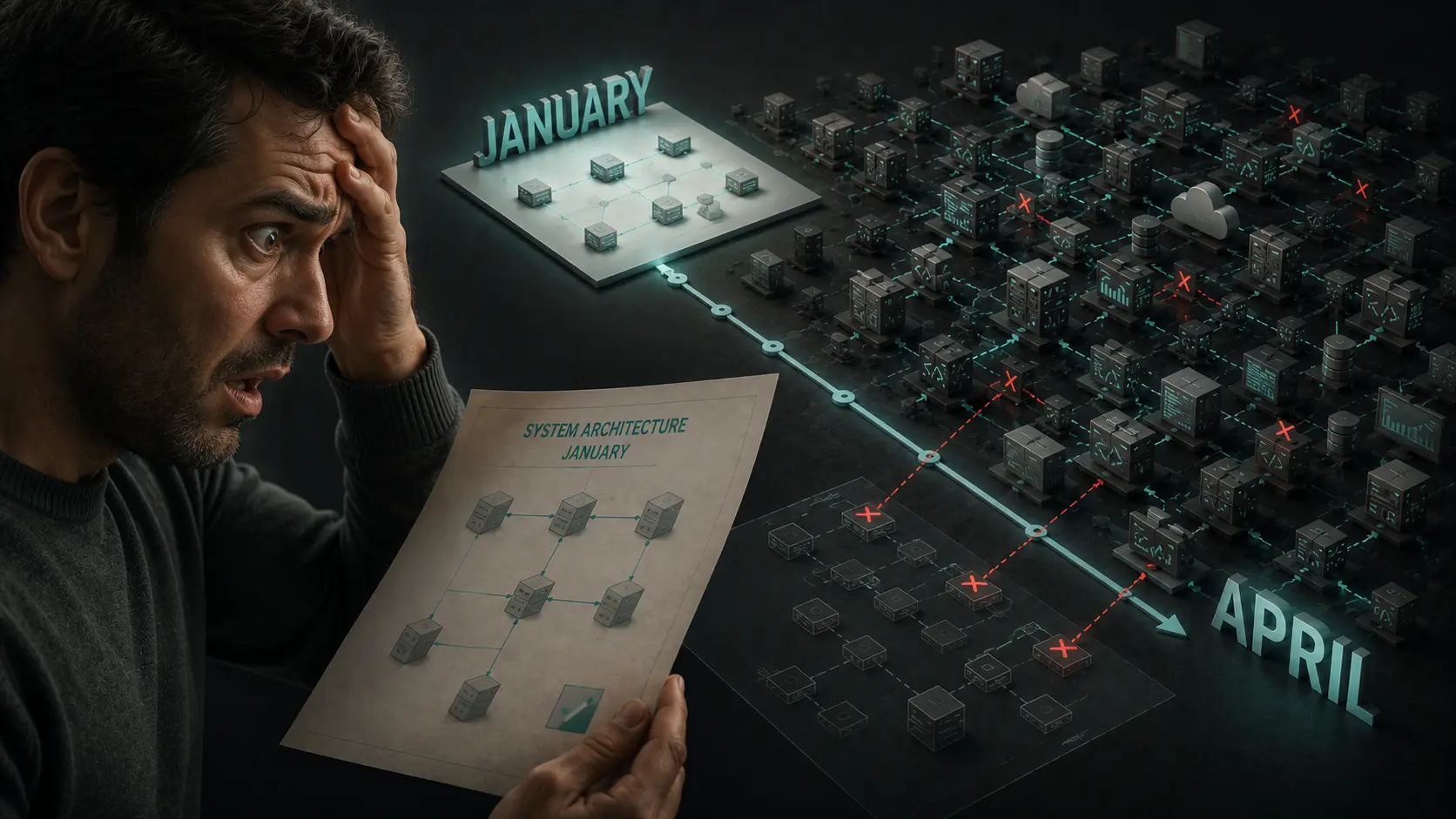
The Diagram Was Wrong By April
Your integration documentation is not out of date because you are lazy. It is out of date because it was built to be typed by hand, and hands cannot keep up. A quarter of teams have stopped typing.
A new colleague joins your integration team. Bright, quick, learning fast. Two weeks in, they ask a fair question.
“Can I see the list of all the systems we run integrations into?”
Pause.
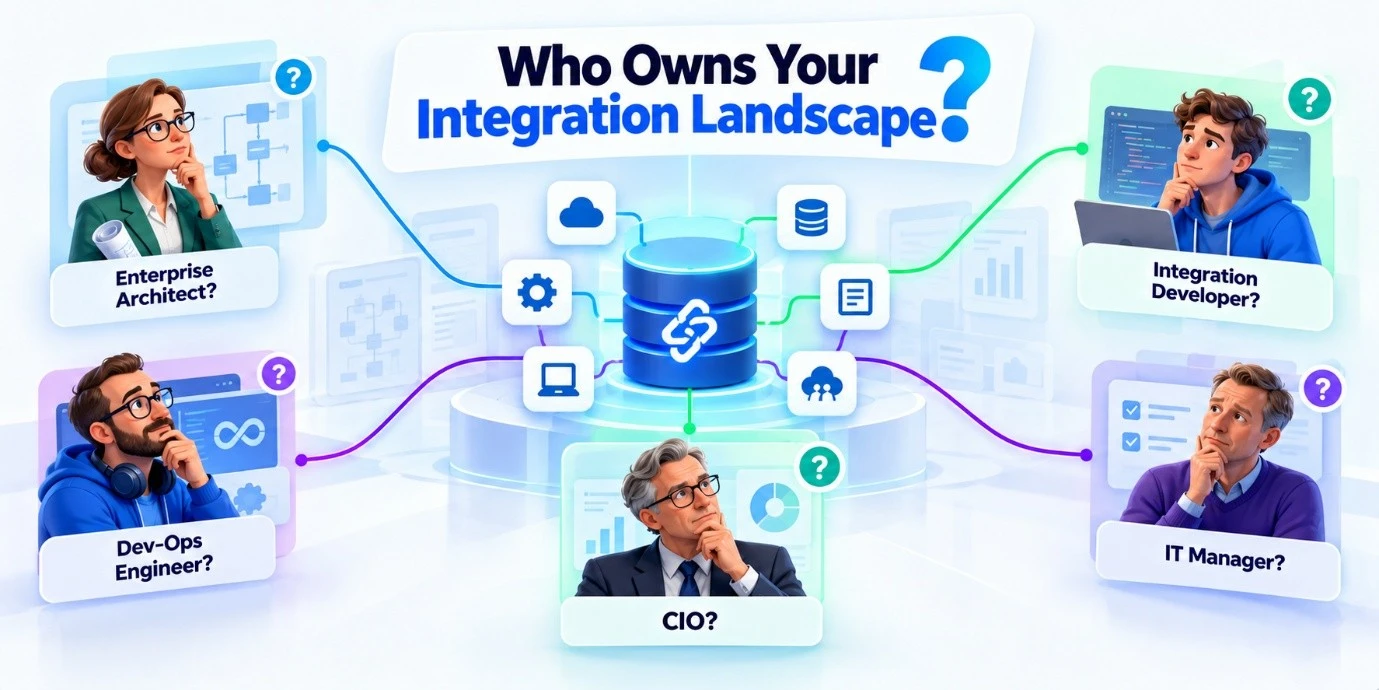
The honest answer sits somewhere between “there is a Visio file from 2021” and “we would have to ask three people on three teams and reconcile what they say.” The list does not exist as one thing. It lives in pieces, in different heads.
You have started the project to fix it before. More than once. It quietly died each time.
That pause is what this piece is about.
1) It is not a tool problem:
Over the last year we sat down with around fifty integration leaders across Swedish and Nordic companies.
We asked one plain question –
“What do you actually have, and how do you know?”
The answers were honest. Most teams described the same gap.
Documentation missing, or last correct three years ago, or scattered across SharePoint, DevOps, an old diagram, and one architect’s memory.
But not all of them.
Roughly a quarter did not have the gap. They were not luckier. They were not better funded. Same sectors, same sizes, same budget pressure.
They had stopped trying harder and changed the question.
Here is the shift.
Most teams treat documentation as a tool problem.
Buy the tool, fill it in, keep it current.
The problem never moves, because the real problem is the method.
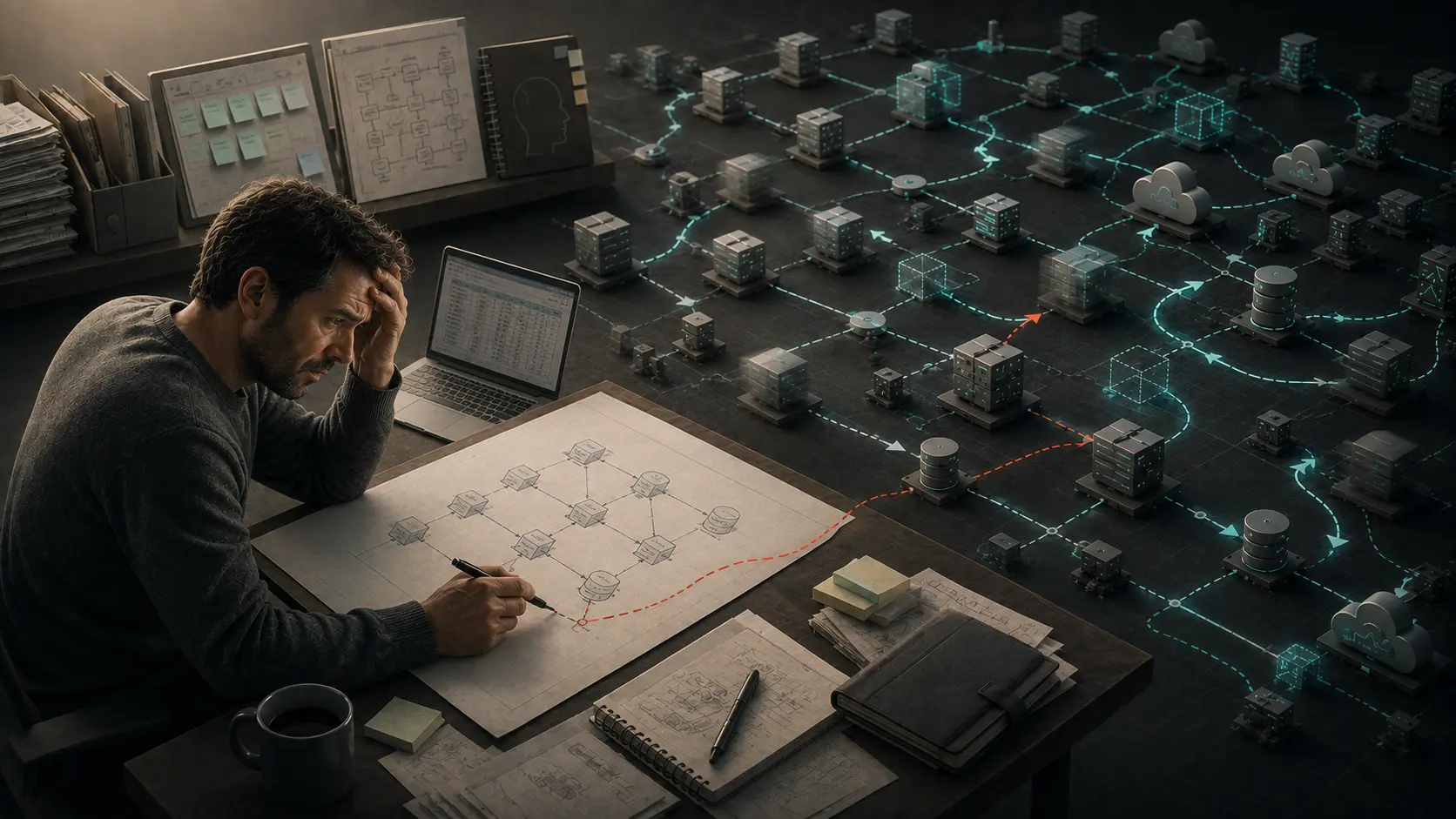
You are asking humans to hand-type a picture of a landscape that changes faster than anyone can type.
You have felt this.
You open the architecture diagram from January and your stomach drops, because you already know it was wrong by April.
Call it stale-by-April.
That is not a discipline failure. It is what happens when the map is drawn by hand and the territory keeps moving.
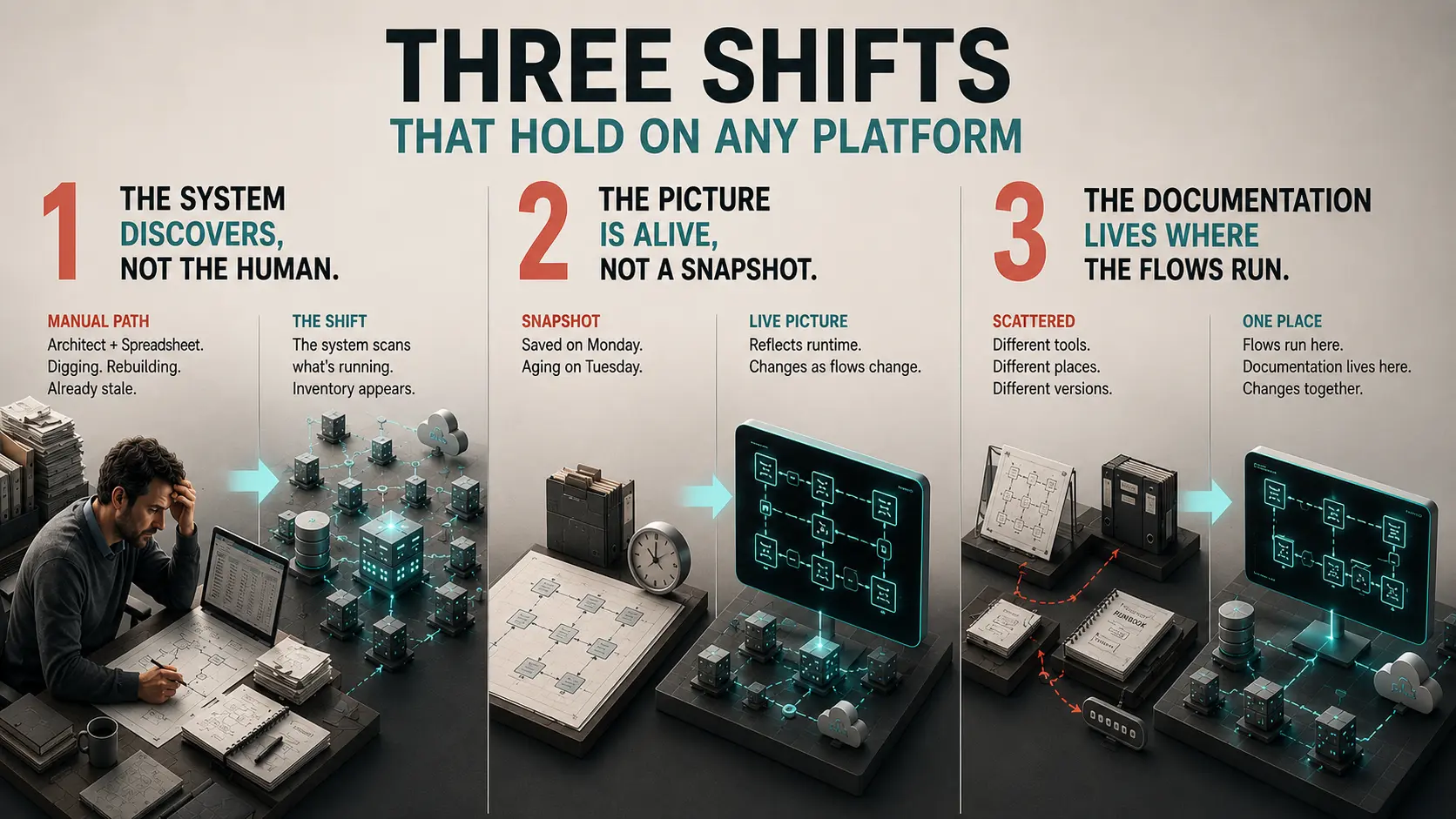
2) Three shifts that hold on any platform:
The teams that escaped the grind did the same three things. They did not always name them.
We call them three shifts.
2 a.) Shift i – The system discovers, not the human.
The manual path starts with an architect and a spreadsheet, digging through old drawings, rebuilding decisions made by people who left years ago.
By the time it is on paper, two new flows have shipped and the document is already stale.
The shift flips the direction.
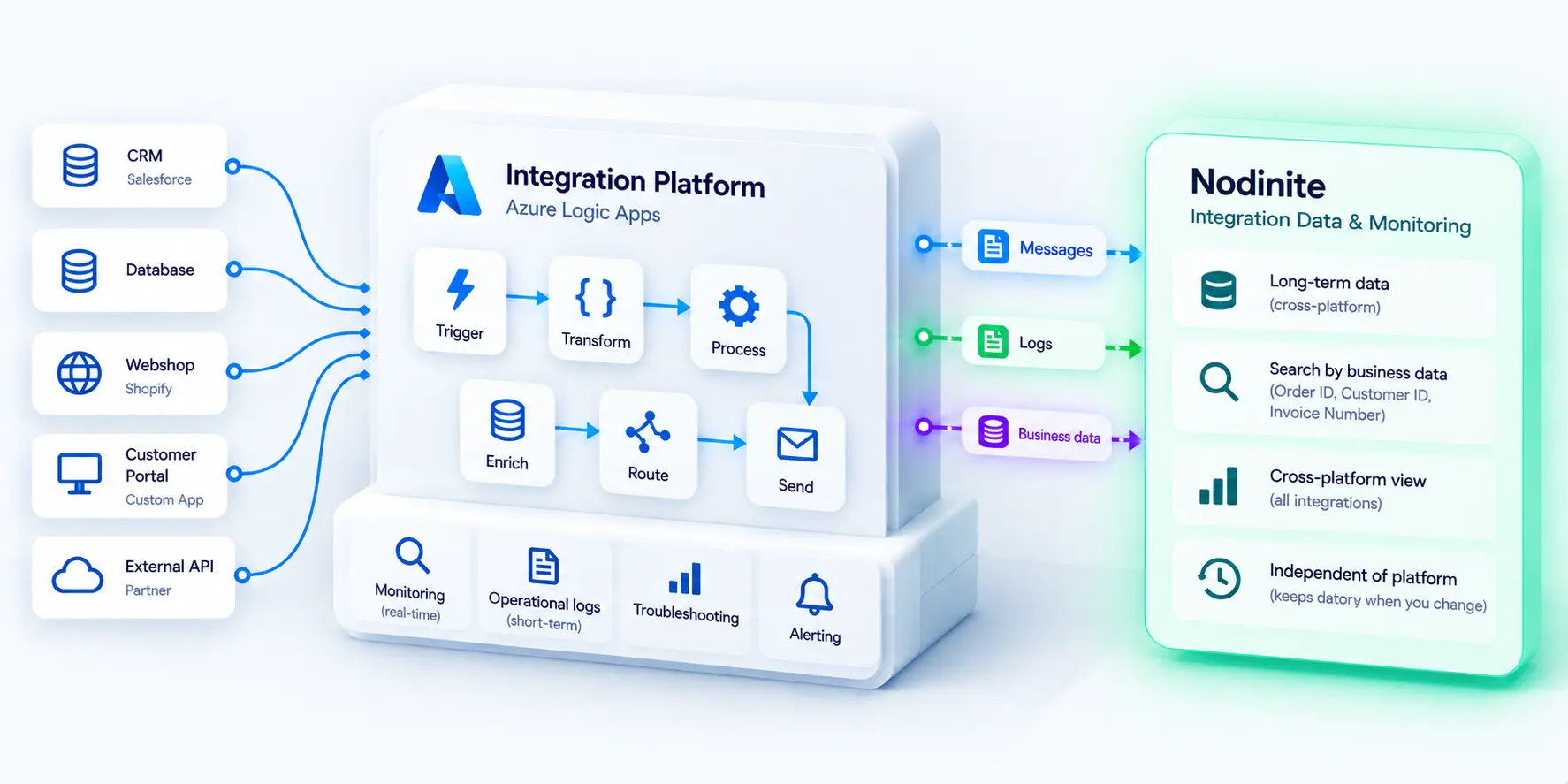
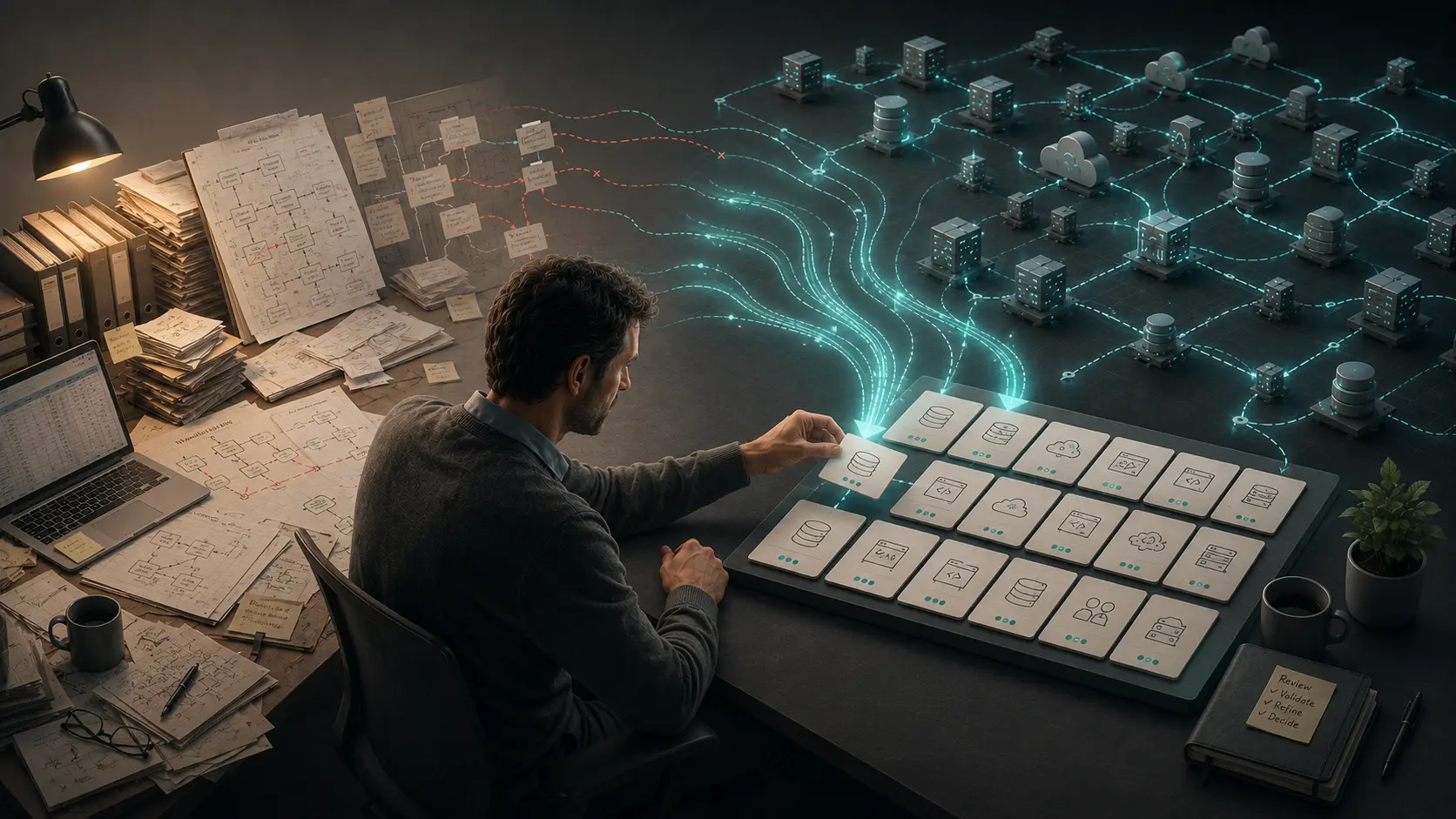
The system that runs the integrations scans what is actually running and produces the inventory itself.
The architect stops typing and starts curating. The work moves from data entry to judgement.
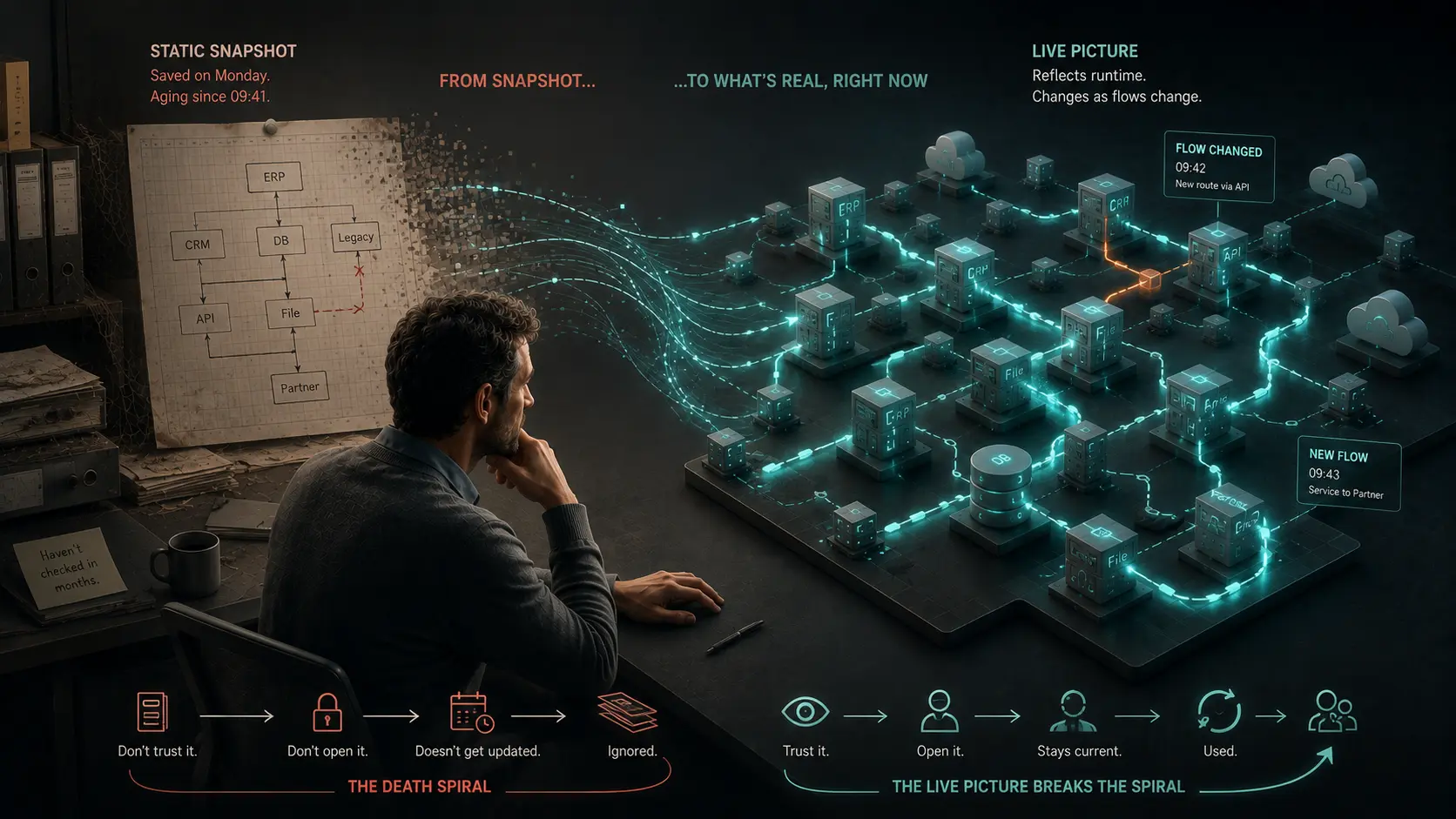
2 b.) Shift ii – The picture is alive, not a snapshot.
A spreadsheet is a photograph. The second you save it, it starts aging.
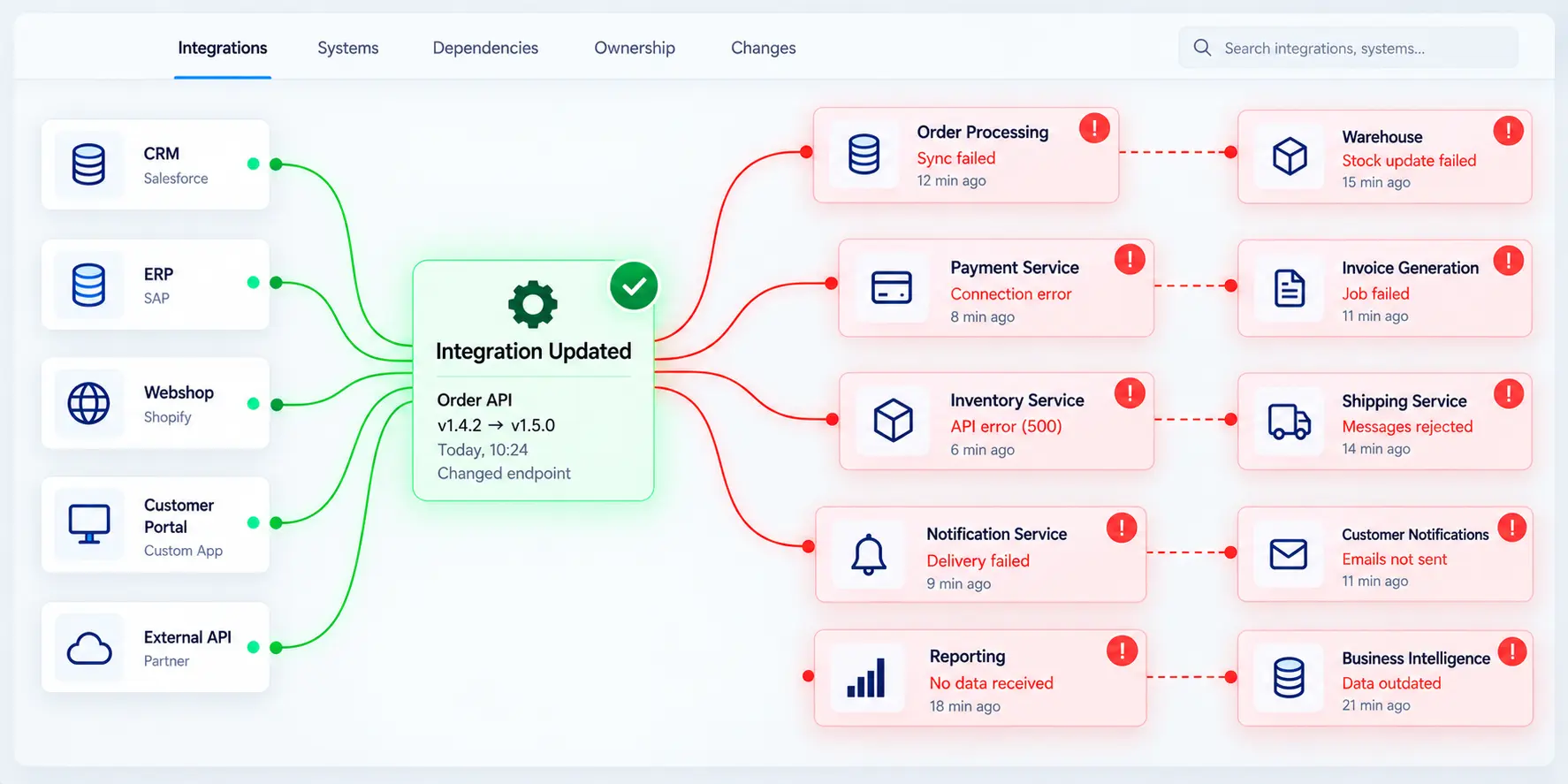
A live picture is different. On Tuesday morning it shows what the runtime looks like on Tuesday morning. If a flow changes, the picture changes with it.
This sounds like a small technical detail. It is not.
It is the difference between trusting your documentation and quietly ignoring it.
Teams that do not trust their docs stop opening them. Docs no one opens stop being kept current.
That is the death spiral. A live picture breaks it.
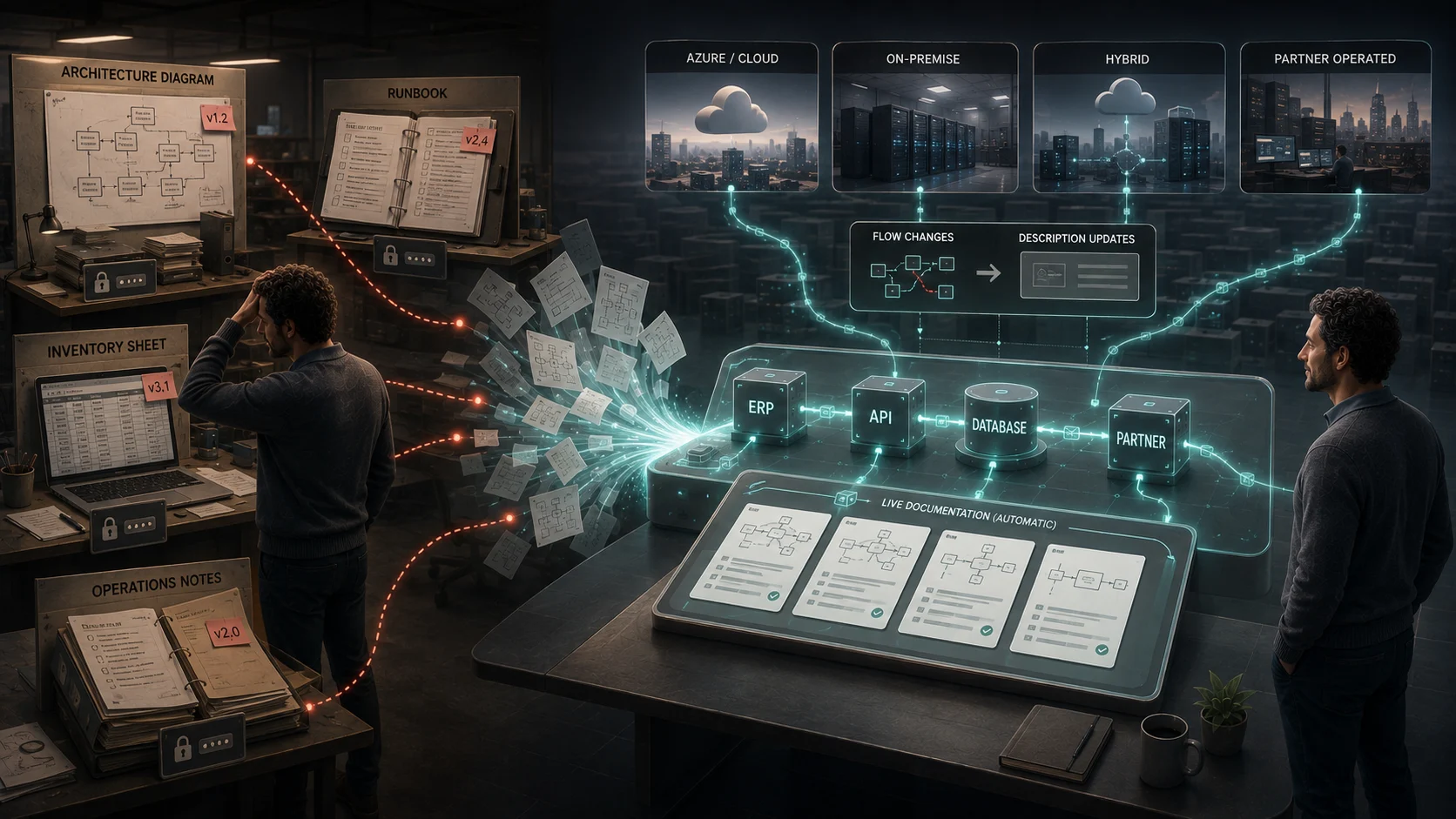
2 c.) Shift iii – The documentation lives where the flows run.
Most teams keep the docs in a different place from the work.
A diagram in one tool. A runbook in another. An inventory in a third.
Four tools, four passwords, four versions of the truth that drift apart the moment one is edited.
The teams that escaped collapsed that into one.
The place that runs the flows is the place that describes them. Changing a flow updates its description, because the description is part of the flow.
Each shift helps on its own. Together they remove almost all the manual upkeep.
The documentation becomes a by-product of running the platform, not a separate project fighting for time.
These are principles, not features. They hold on Azure, on-premise, hybrid, or with a partner running operations for you.
One platform or several stitched together. The stack matters less than the shifts.

3) What it buys you:
This is not theory. We have heard the same story over and over.
One architect described the change as “getting my eyesight back” after years of working in the dark.
Others describe new-integration discovery dropping from days to hours, and audit prep from weeks to days.
The integrations did not change. The view did.
4) Start with one:
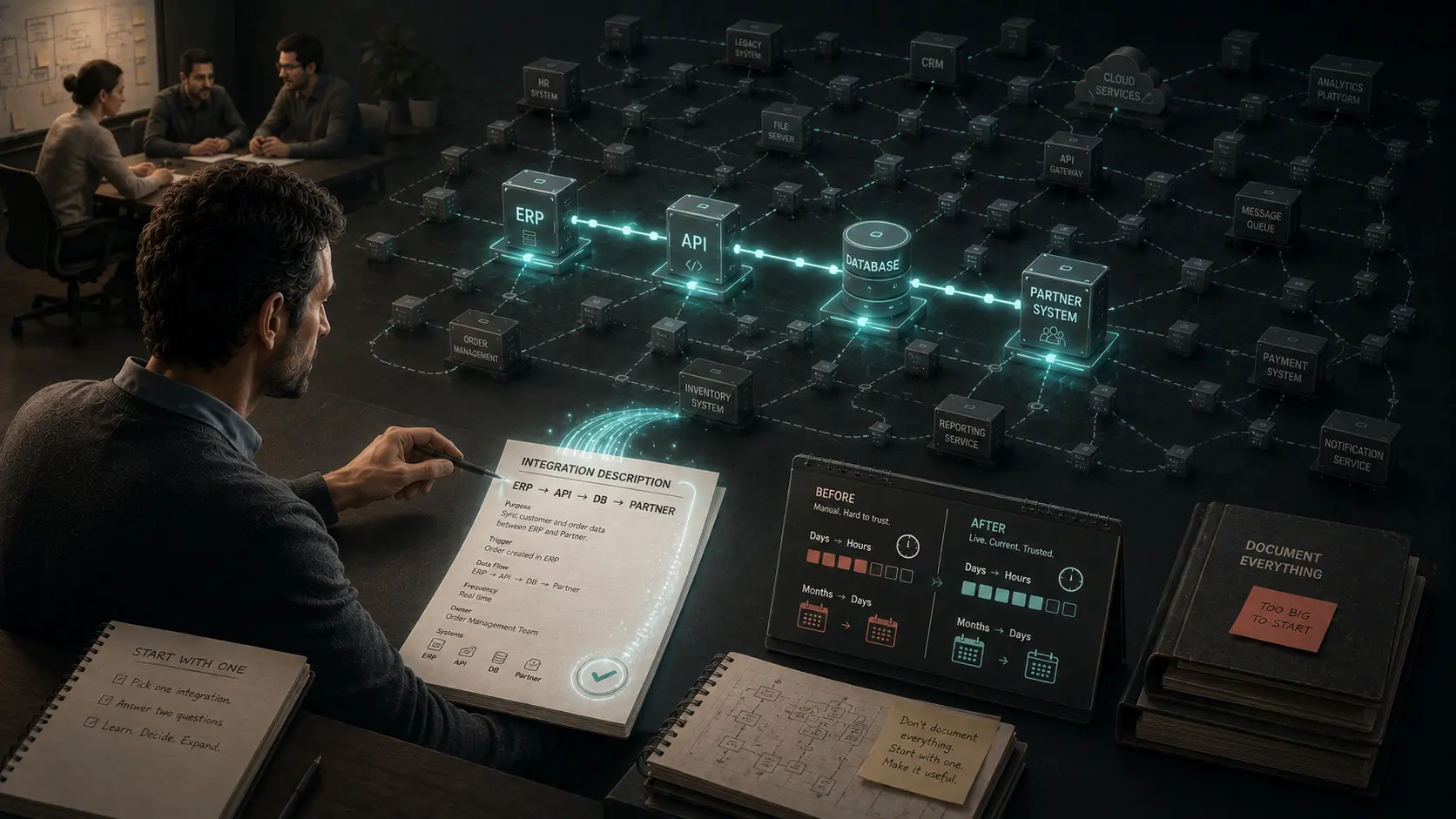
You do not need a five-month program to feel this. You need one integration.
Pick a single integration you would want to start with.
Not all of them. One. Then write down two things.
First: If this one integration had a live, current, auto-discovered description, who on your team would benefit, and how?
Second: What would actually change in your week?
If the honest answer is “the architect gets a quarter of their week back, and the next migration scopes in days instead of months,” you are not alone. That is the pattern.
That one page, in plain language, will tell you more about whether these shifts fit your team than any tool demo could.

5) The door is closer than you think:
Integration documentation has always been hard, and for good reasons.
The systems stack across decades, built by different people at different times.
The manual path was the right work for the world it was designed for.
A small estate, a slow rate of change, a team that held the whole picture in their heads.
That world stopped existing for most teams about ten years ago, quietly, without anyone announcing it.
The grind is real. It is also escapable.
A quarter of teams already stepped out of it, and they did not do it by working harder.
They changed how the work is organised so the picture keeps itself current.
If you want to talk through where your team sits, or which integration would make the best first one to try, we are happy to have that conversation.
You would leave with a clearer read on your own landscape, whether or not you ever change a thing about your stack.
Start with one integration. Write the two lines. See what the picture tells you.