The Part of Your Stack that Survives Every Migration
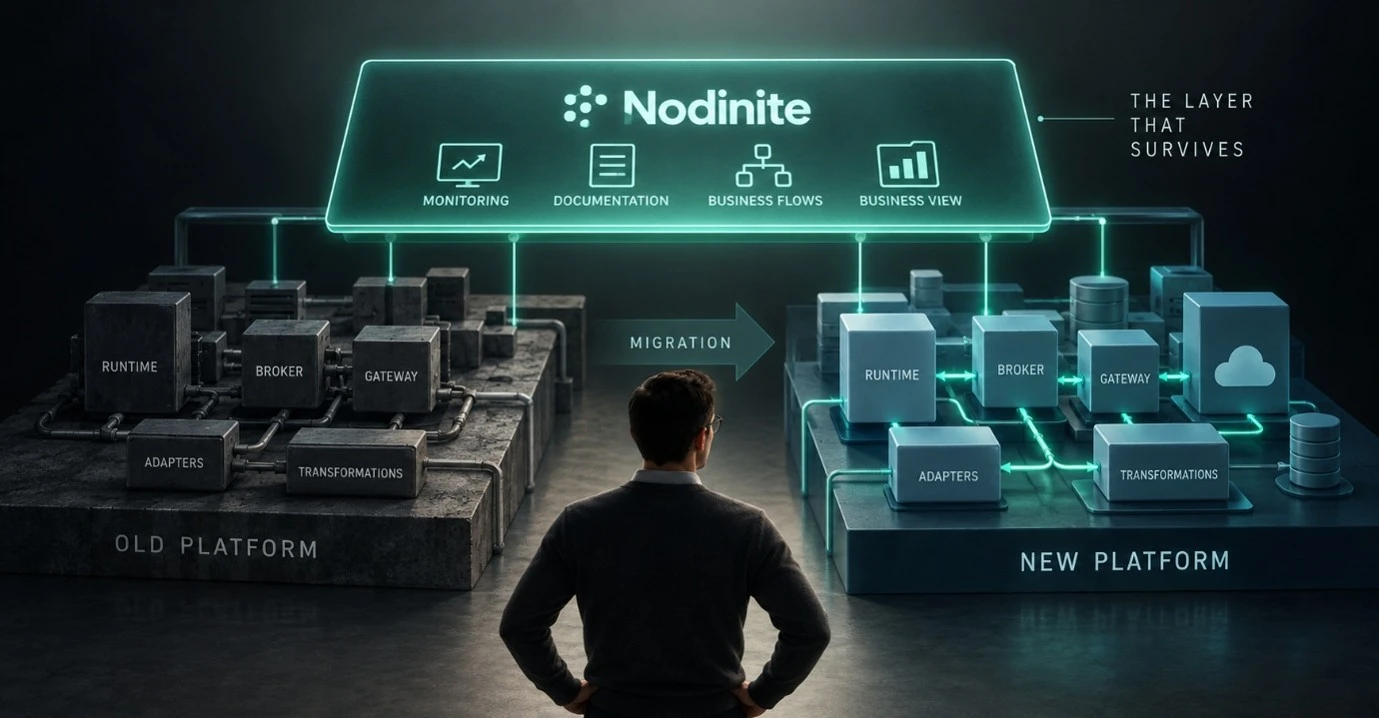
When you migrate off an old platform, most of your stack changes. One part does not have to. The trick is knowing which part before you sign anything.
Picture a migration meeting. The kind you have sat in.
The CIO has spent half an hour on the big runtime decision. Cloud platform, container platform, a partner running it for you, or a hybrid mix. Pros, cons, timelines, cost. The room is engaged. The move is real and it is going to happen.
Near the end, someone asks a plainer question.
“Of the tools we run today, which ones will we still be using after this migration?”
The easy half is easy. The runtime changes. The broker probably changes. The gateway changes. The adapters change. Six or seven big pieces will look different a year from now.
Then the harder half. “And the tools we use to see what is happening? The monitoring? The documentation? The view the business looks at?”
Silence. Not because nobody knows the answer. Because, until that meeting, nobody had asked whether those tools were tied to the old runtime in ways the team never had to test.
Latency well inside the agreed range.
Then someone asks a different question.
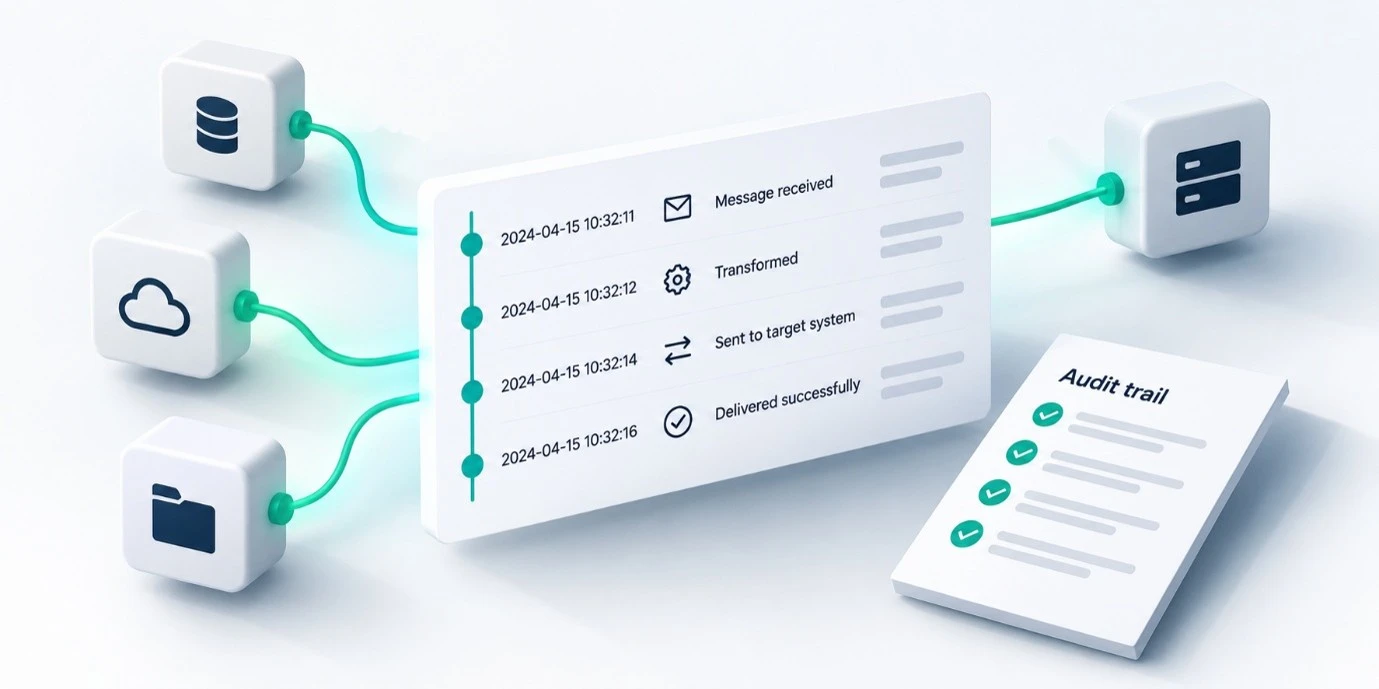
“What business process broke when that system went down on the 14th? Which orders were affected? Which customers? Which postings?”
Silence. Not because nobody knows the answer. Because, until that meeting, nobody had asked whether those tools were tied to the old runtime in ways the team never had to test.
That silence is what this note is about.
Your stack is really two stacks
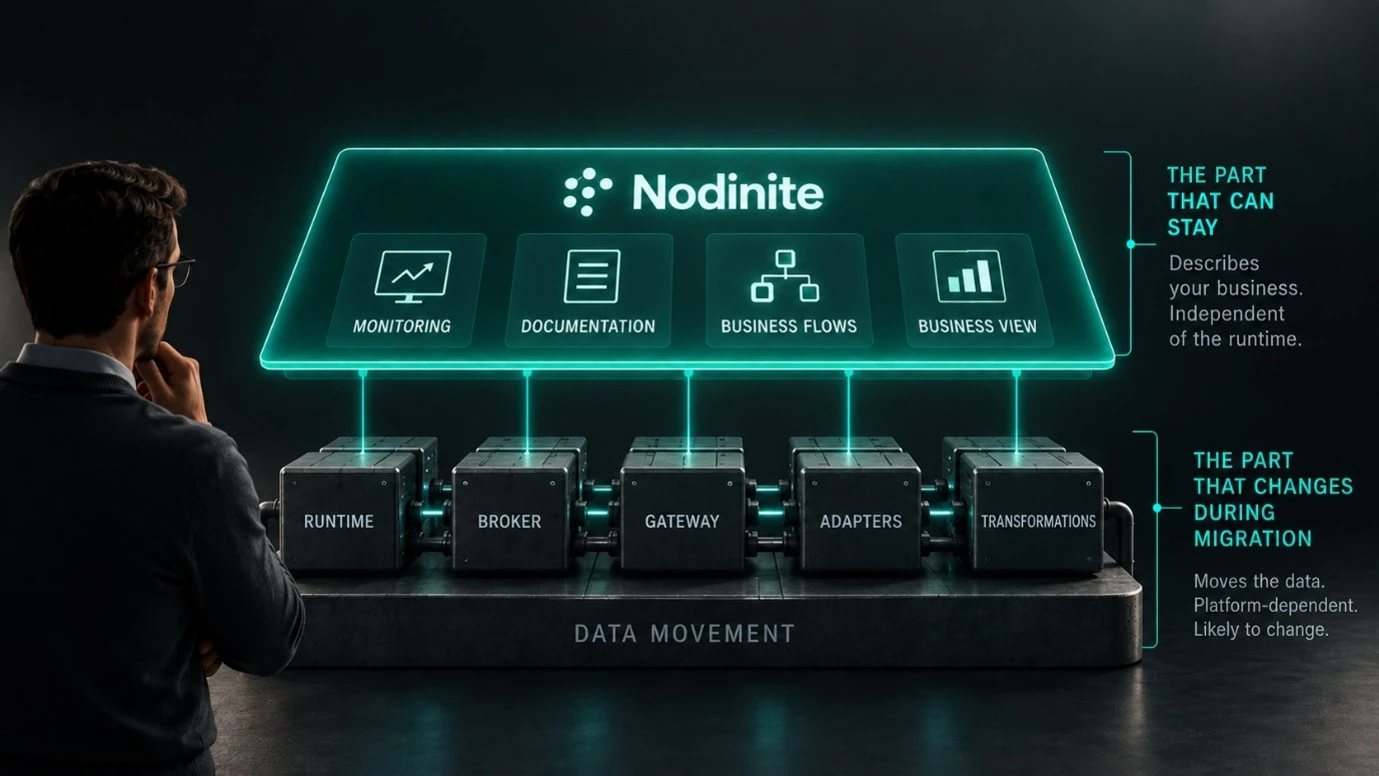
It helps to stop thinking of your integration stack as one thing. It is two.
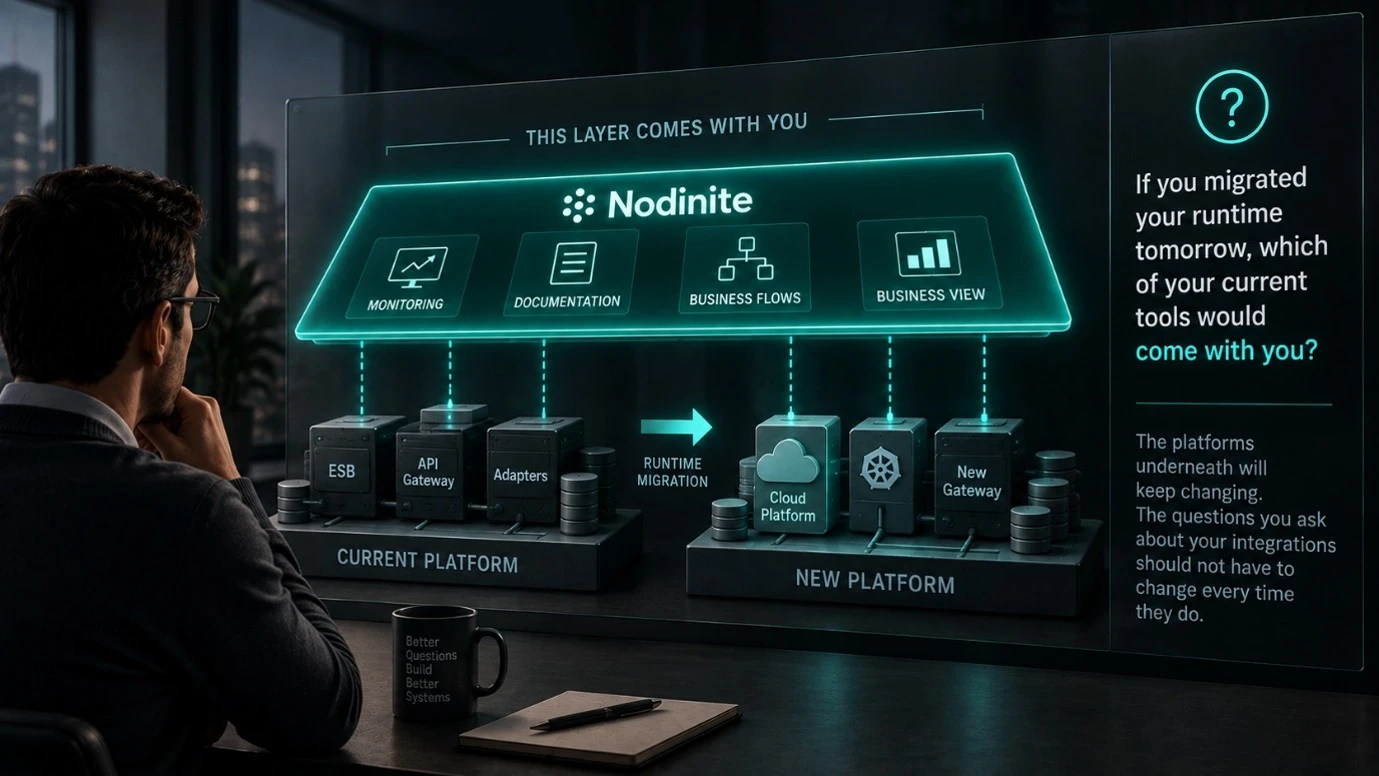
One half is where the data moves. The runtime. The broker. The gateway. The adapters. The transformations. When you migrate, most of this half changes by definition. That is what a migration is.
The other half is where the stack is understood. The list of what integrations exist. The architecture diagrams. The business flows. The view that shows whether an order actually went through. This half does not describe your runtime. It describes your business.
And here is the part most teams miss under deadline pressure.
The second half does not have to change when the first half does.
The systems in your business exist no matter which engine moves messages between them.
The business processes were there before the platform arrived. They will be there after it is replaced.
So if you build that second half to stand on its own, it does not have to migrate. It keeps reporting the whole way through, on the old flows and the new flows at the same time.
That is the quiet lever almost nobody pulls.
A story about why this matters
Let me tell you where this idea comes from, because it was not a marketing decision. It was math.
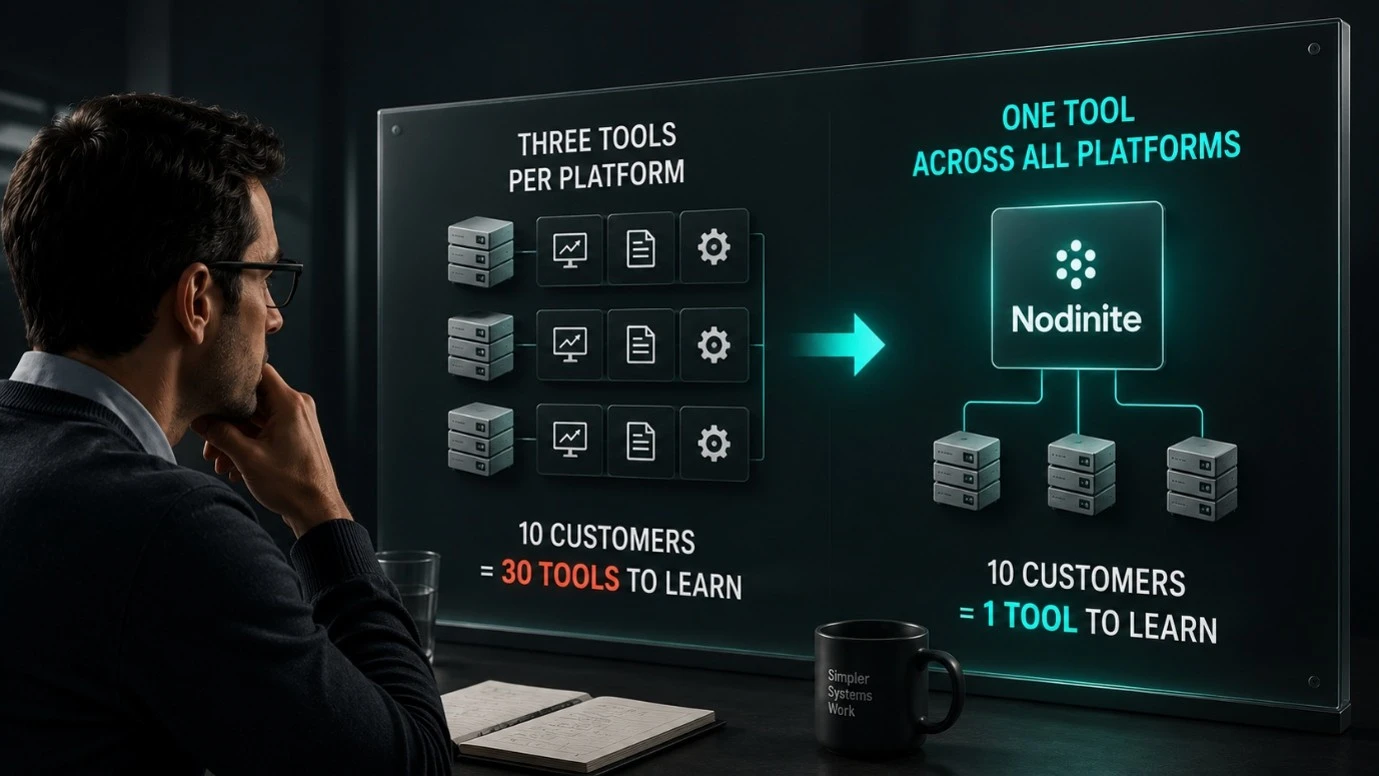
Back in 2008, some of us ran a small consulting firm in Karlstad. We looked after integrations for a lot of different companies, and those companies ran different platforms. If every platform needed its own monitoring tool, and we had ten customers, that was thirty tools to train every consultant on.
The math did not work.
So the question got asked out loud in a meeting one of us still remembers.
“With ten customers on three different tools, I need to know thirty tools. With one tool that works across all of them, I have one thing to learn, no matter how many customers we take on.”
That sentence decided everything.
The tool had to sit above the platforms, not inside any one of them. It had to be neutral from day one, because the business of serving many customers demanded it. In 2018 the firm was renamed around that exact idea: the node that unites your systems.
None of that is a sales pitch. It is just the reason the visibility layer was built to survive a runtime change. It had no choice.
What we saw across fifty migrations
Over the last year we sat down with around fifty integration leaders across Sweden and the Nordics.
We did not ask how their vendor was doing. We asked one thing.
“When you migrated, what survived the move?”
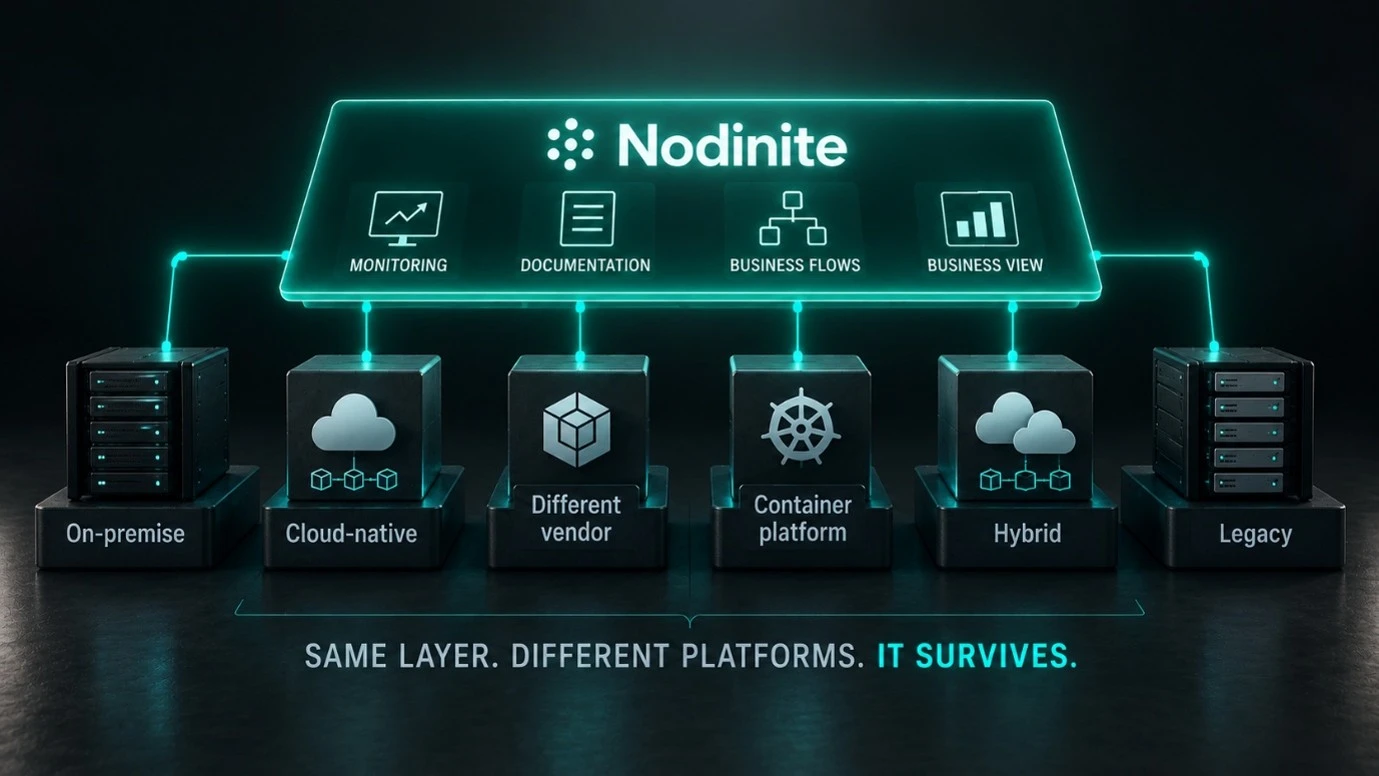
The answers were unusually consistent. Teams went in every direction. Cloud-native. A different vendor. A container platform they built themselves. Some stayed on the old runtime on purpose. Some ran hybrid, old and new side by side.
Different choices, all defensible.
But in almost every team that had the visibility layer before the move, it was still there after.
Not because anyone forced it.
When they reviewed what to keep and what to bin, they kept it.
One architect at an energy company put it plainly. “The visibility layer is not where the messages run. It is where we look to understand them. That part does not need to change when the runtime changes.”
We have seen the same pattern hold at customers now on their third platform with the same layer above it.
The keepable: the migration test
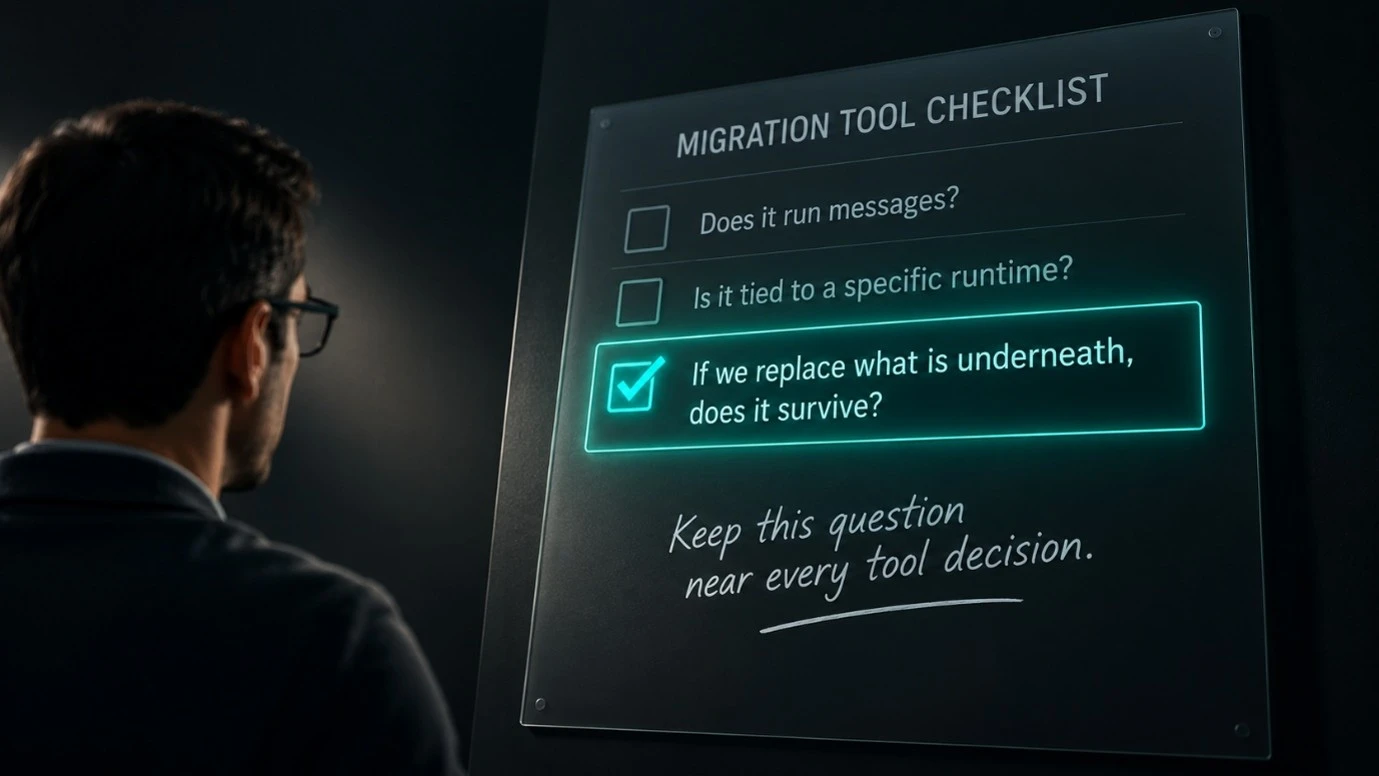
Here is the one thing to take from this note. Keep it near your next tool decision.
Before you buy any integration tool in 2026, ask one question:
“If we replace what is underneath this, does it survive?“
Call it the migration test. It takes ten seconds and it sorts your whole toolbox into two piles.
If the honest answer is yes, you are buying a long-term asset.
It will outlast this runtime and the next one. The mental map your best people built over years stays valid when the engine underneath changes.
If the honest answer is no, you are not buying a long-term asset at all.
You are buying a sub-component of your current runtime.
That is fine, as long as you know that is what it is, and you price it and plan it that way.
Most tools have never been sorted into those two piles. The migration test does it for you.
One thing worth sitting with
We are not asking you to do anything today. Just look at your own stack with one lens for a few minutes.
If you migrated your runtime tomorrow, which of your current tools would come with you?
If the answer is fewer than you would like, that is worth a conversation.
Not necessarily with us.
With your team. With your partner. With the architect who joined last month and is still asking honest questions about why things are arranged the way they are.
The platforms underneath will keep changing. The questions you ask about your integrations should not have to change every time they do.