Before You Change an Integration, What Else Could It Affect?
Before an integration change goes live, you probably know what it is supposed to do. But do you know what else it might affect?
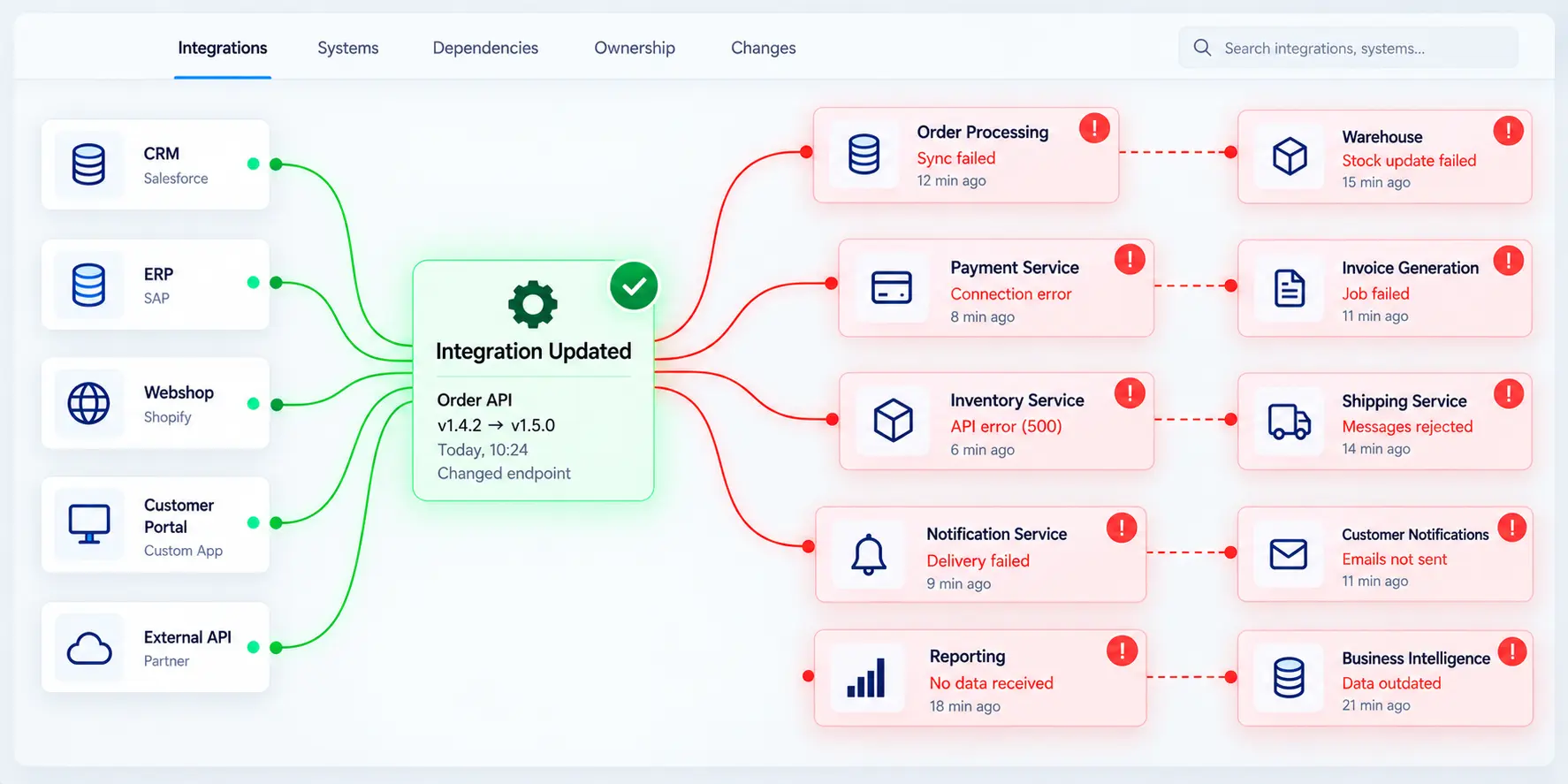
In an integration landscape, even a small change can have consequences elsewhere. A modified API, updated mapping, new certificate or changed endpoint may look isolated. In reality, other integrations, applications or business processes may depend on it.
That makes one question particularly useful before any change:
What else does this touch?
The difficult part is often understanding the dependencies
When something needs to change in an integration, making the technical change itself is not always the time-consuming part.
The challenge is often understanding the dependencies around it.
Which systems consume this API? What processes rely on this integration? Who owns the affected applications? Is there another team that needs to know?
Without a clear view of these relationships, teams tend to rely on documentation, individual knowledge and experience. That can work well, until something has changed, someone is unavailable, or a dependency simply was not known.
The result is familiar to many integration teams: a change that looked safe creates an unexpected effect somewhere else.
You cannot account for what you cannot see
This is not necessarily a problem of poor planning. Often, the information needed to make a good decision is simply difficult to find.
One architecture team described the challenge very simply:
“We have no good system for seeing dependencies between systems.”
The same problem can appear in other ways. In one global organisation, three separate chatbot solutions were built on three different technologies before it became clear that similar capabilities already existed elsewhere in the business.
The common issue was visibility. As integration landscapes evolve, it becomes increasingly difficult for any one person or team to know everything that already exists, and everything that depends on it.
Replacing memory with a system
A useful integration inventory should do more than tell you what systems and integrations exist. It should also help you understand how they are connected.
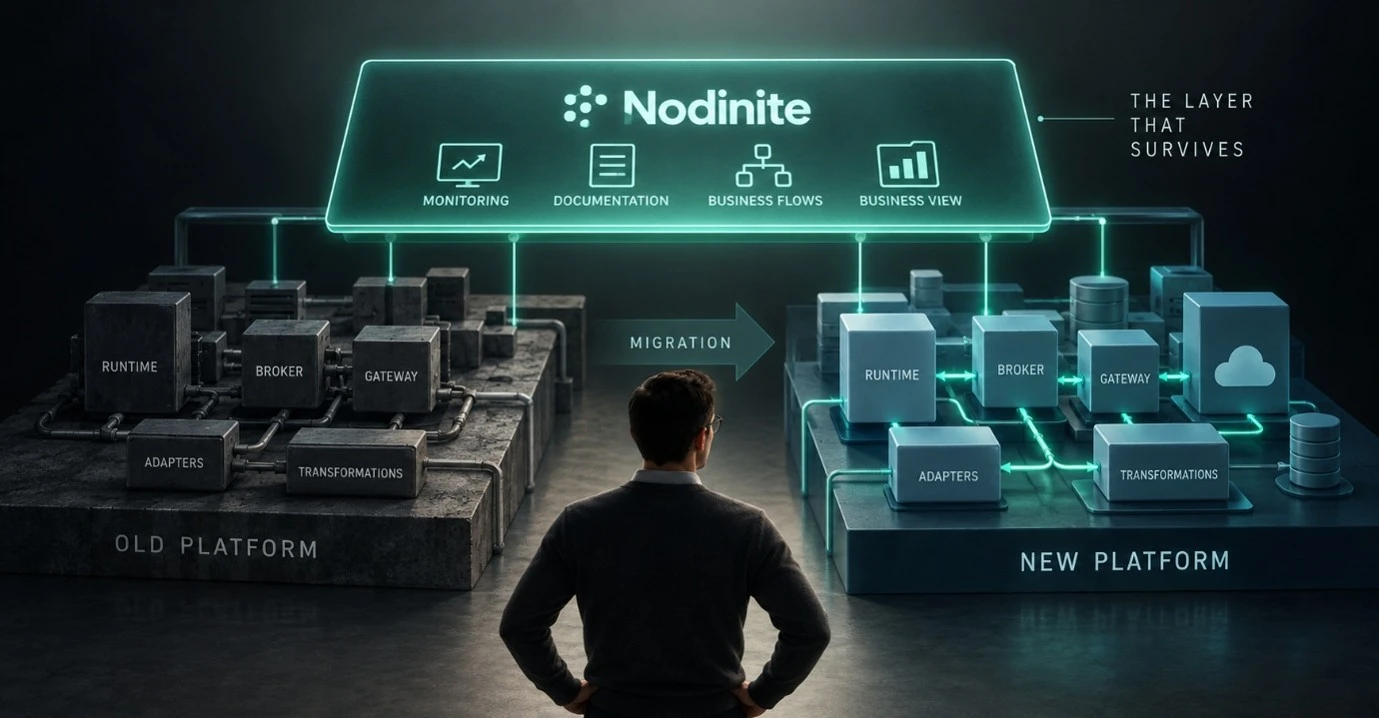
For organisations using Nodinite, this is where an always-current view of the integration landscape becomes valuable. By keeping information about integrations, dependencies and ownership in one place, teams can investigate the potential impact of a change before it reaches production.
The principle itself is not specific to Nodinite. Whatever tools and processes you use, the important part is to make dependency information visible, current and accessible to the people making changes.
Before your next change goes live, consider three questions:
What does this change affect downstream?
Who owns the systems or processes involved?
Has someone checked the dependencies, or are we assuming we know them?
“What else does this touch?” is a simple question.
Having a reliable answer can make all the difference.