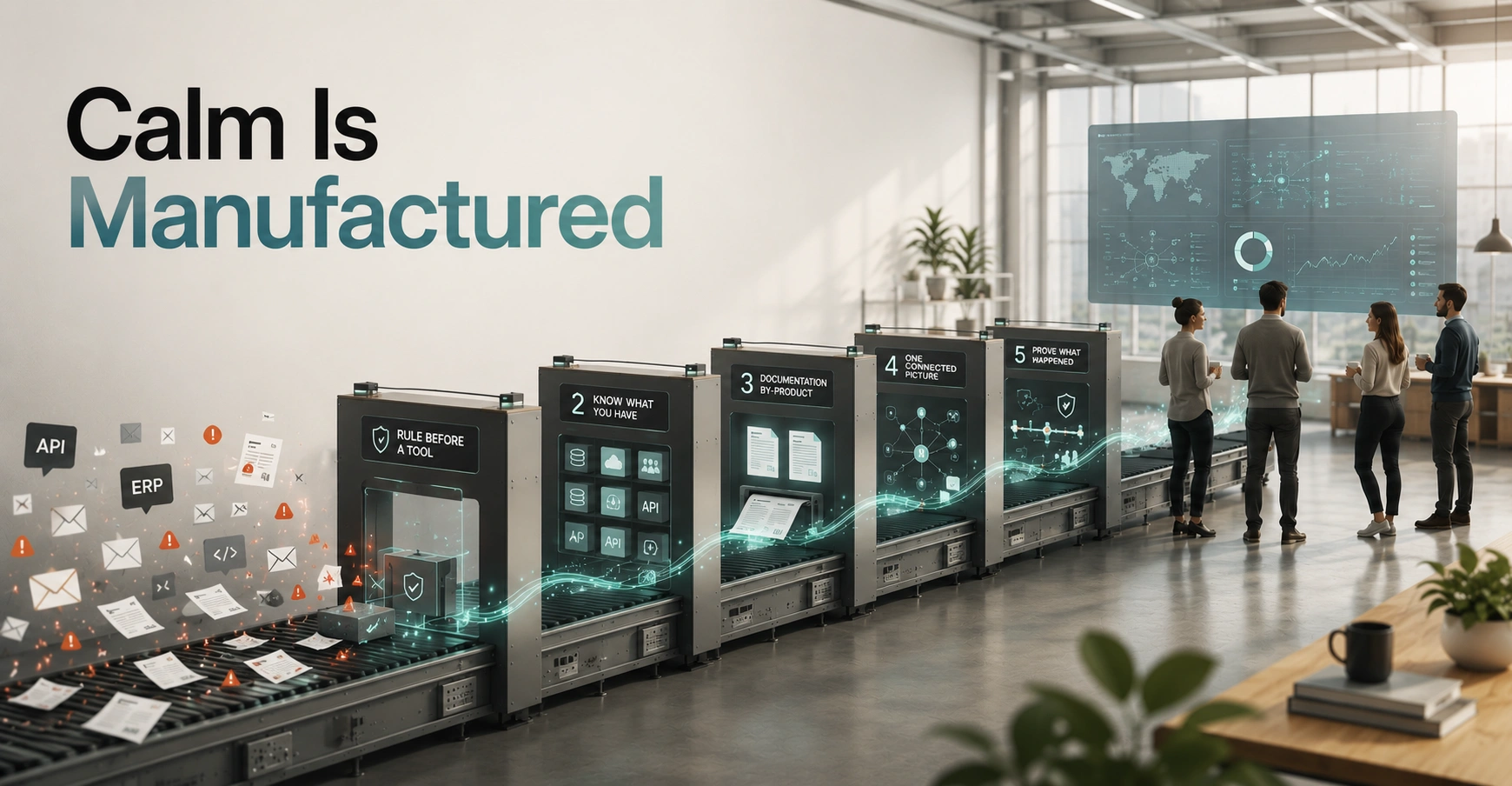
Calm Is Manufactured: The Steadiest Integration Teams Are Not the Smartest
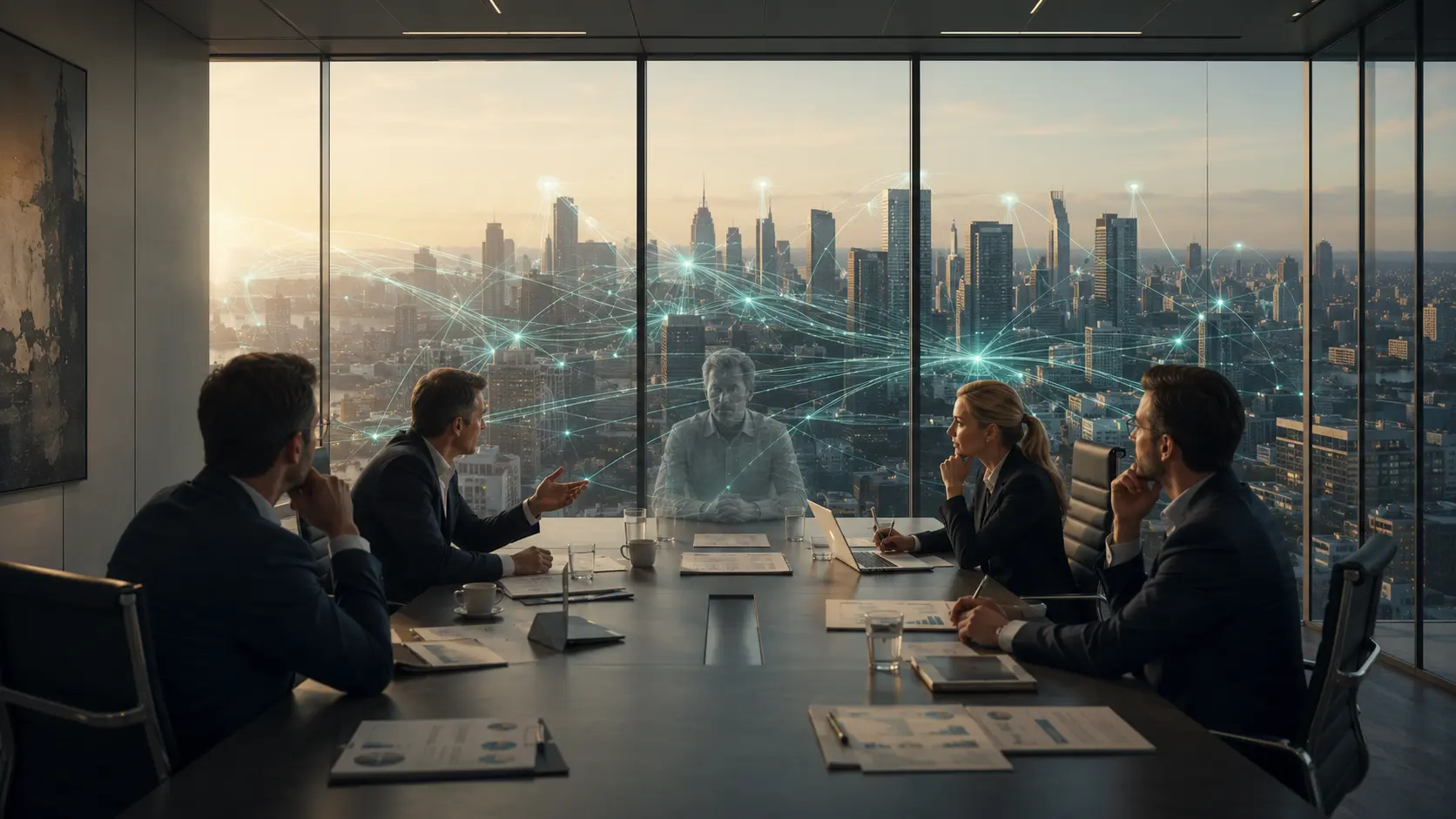
Two teams get the same 3am alert. One panics for an hour. One barely looks up. The difference is not intelligence, budget, or technology. It is a discipline they chose to hold, and you can choose it too.
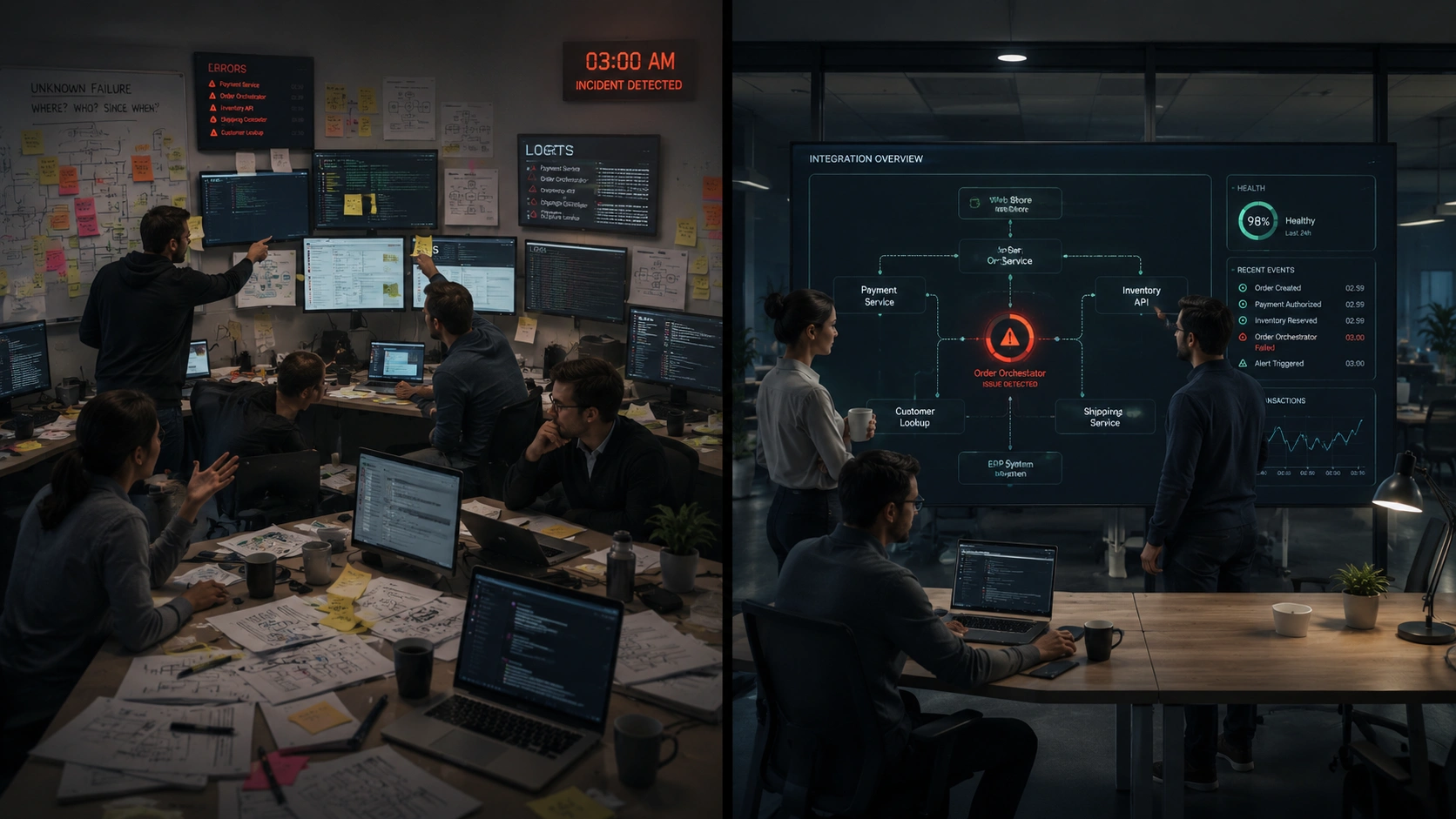
Three in the morning. An order has not arrived.
Somewhere across a few hundred integrations, a message stopped. The only questions that matter are which one, whose, and since when.
The room fills up. Everyone opens their own tool and compares screenshots. The person who understood that flow is in another meeting, or left two years ago. An hour goes by before anyone can even say whose problem it is.
Another team, in another building, gets the same alert. They barely look up. They know what they have, who owns it, and where to look. They fix it and go back to their day.
Same alert. Same night. Two completely different rooms.
So here is the question worth sitting with. Why do two teams with the same tools react so differently?
The easy answer is that the second team is just better. Smarter people. More budget. Newer technology. That answer is comfortable, because it lets everyone off the hook. We would be calm too, if we had what they have.
It is also wrong.
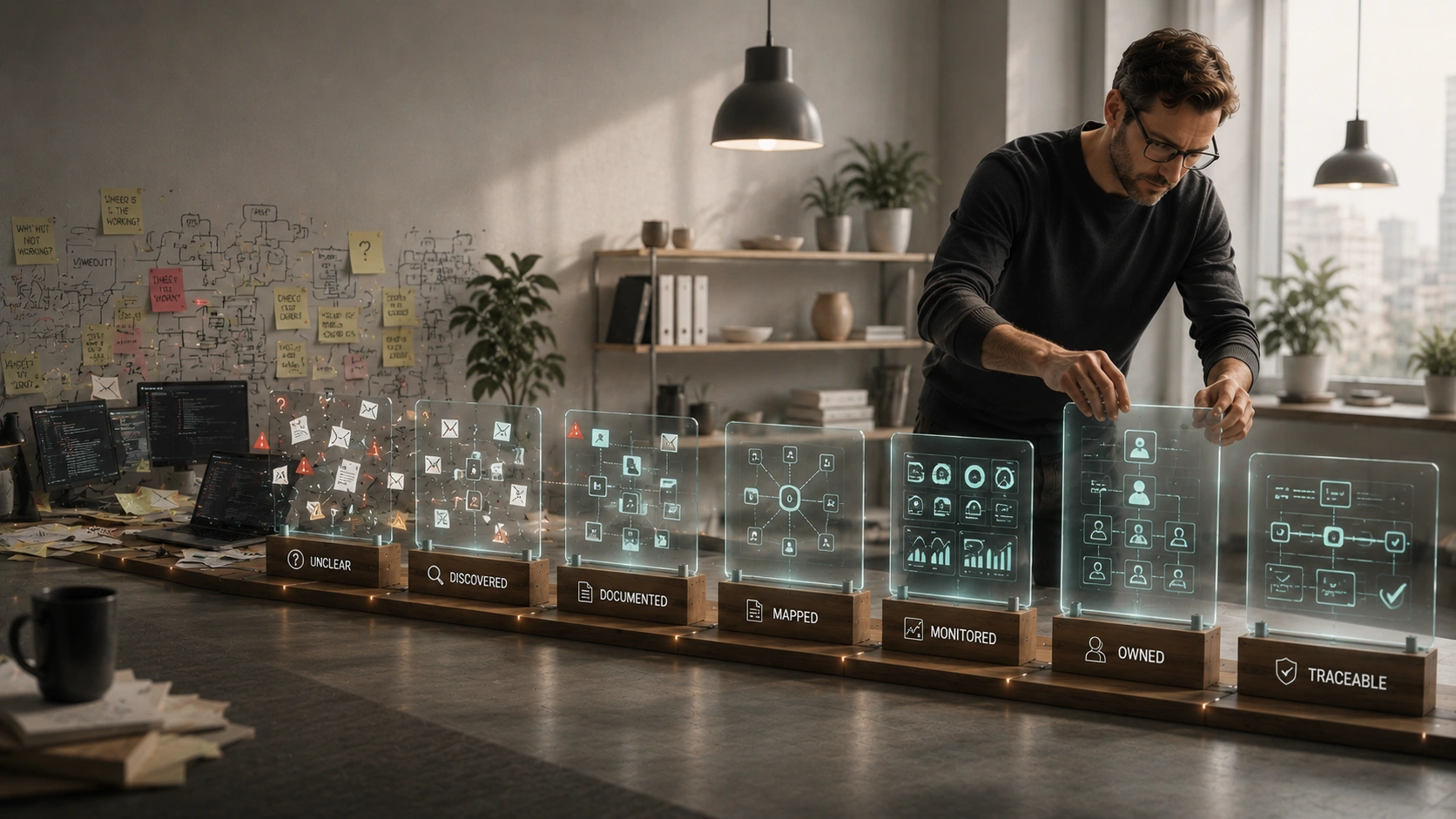
1. Calm is not born. It is built.
Think of calm the way you think of a good product. It does not just appear. Somebody built it on purpose, one step at a time, on a line they set up in advance.
The panicking team did not build that line. The steady team did. That is the whole gap.
Over the past year we sat down with around fifty organisations and asked how they actually run and document their integrations. Manufacturers, energy companies, public-sector teams, banks. Old platforms and new ones, because calm and firefighting both show up on each.
The honest finding was the uncomfortable one.
The calm teams were not smarter. They were not on better technology.
They had decided to do a few plain, unglamorous things on purpose, and to keep doing them. The firefighting teams kept meaning to get around to it.
Call it manufactured calm. Calm is not a mood some teams are lucky enough to have. It is something a team builds on purpose, so that order never depends on goodwill.
And because it is built rather than handed down, any team can build it. On any platform. Starting this week.
2. The line has five stations
When you look closely at what the calm teams actually did, the same shape keeps showing up.
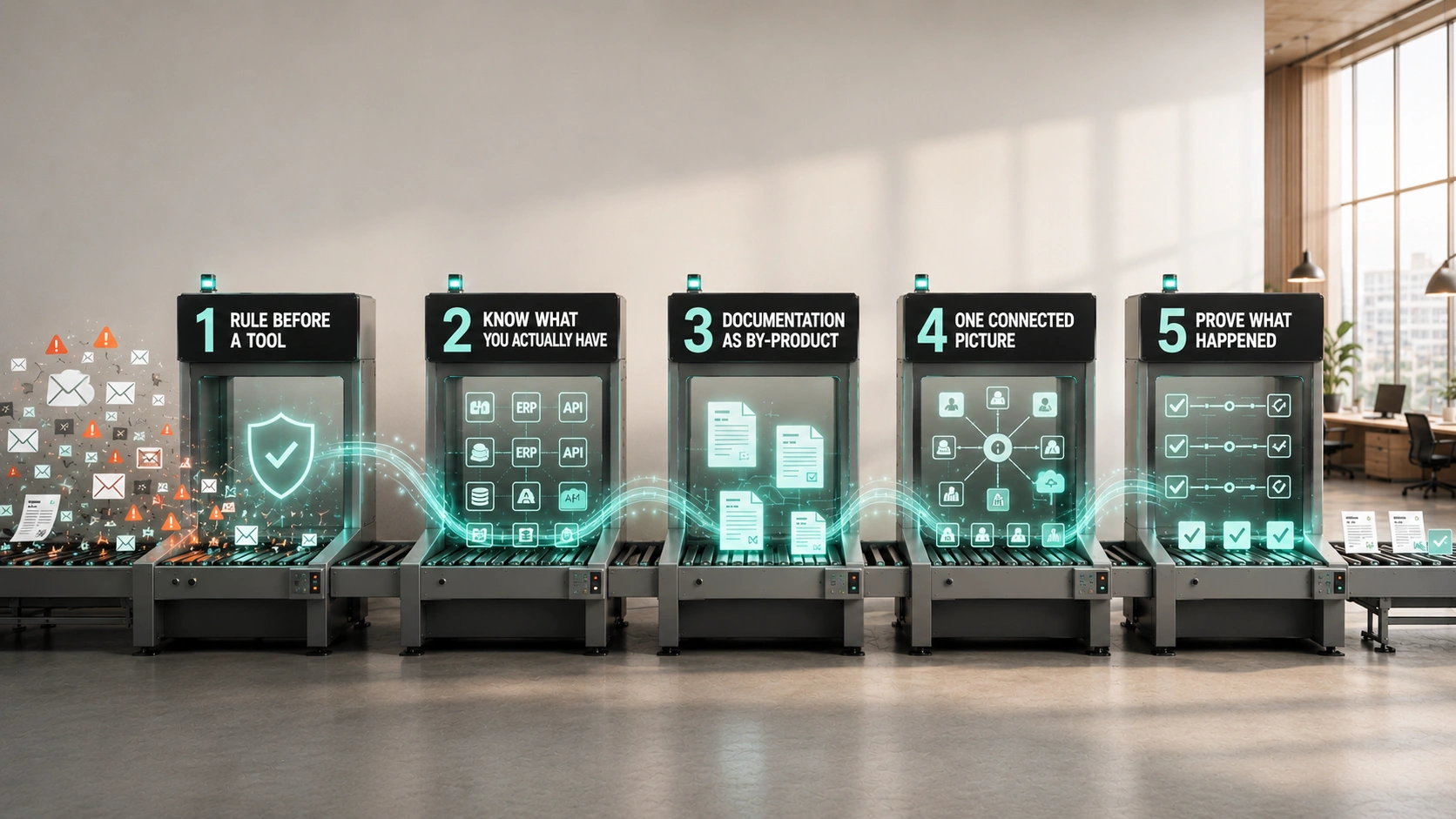
Picture it as a production line. Not a big machine you buy. A set of stations the team decided to run, in order, every time. Each one is ordinary on its own. Together they make the calm.
Here are the five stations:
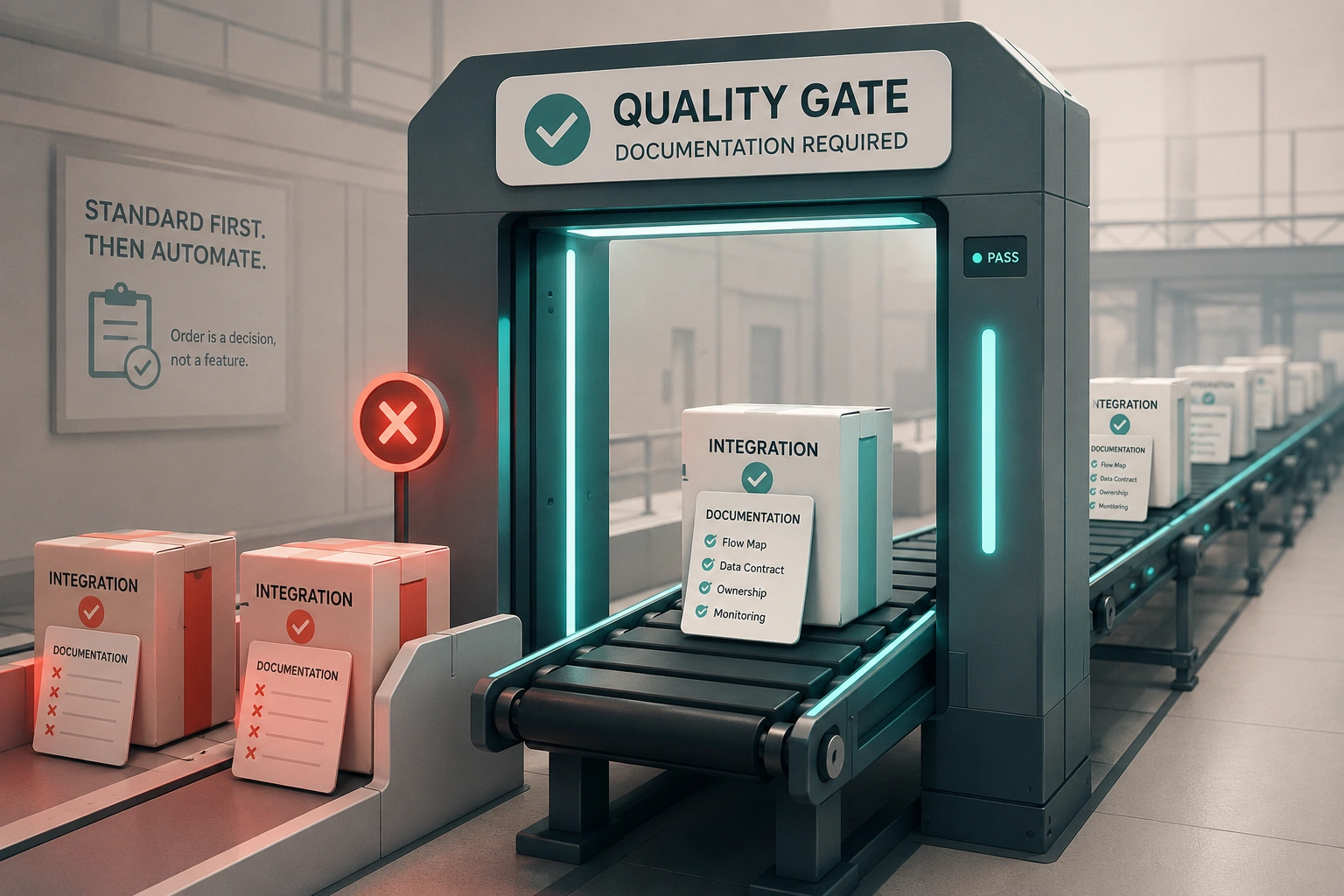
Station i: Put a rule before a tool.
Not “we should document.” Instead: if it is not documented, it does not reach production.
Documentation that runs on good intentions falls apart, because there is always a more urgent integration to build. A rule takes the choice away. It is the quality gate at the top of the line. Nothing moves down the line until it passes.
Only a handful of the teams enforced a line like that, and almost all of them were the calm ones. In our opinion order is a decision, not a feature.
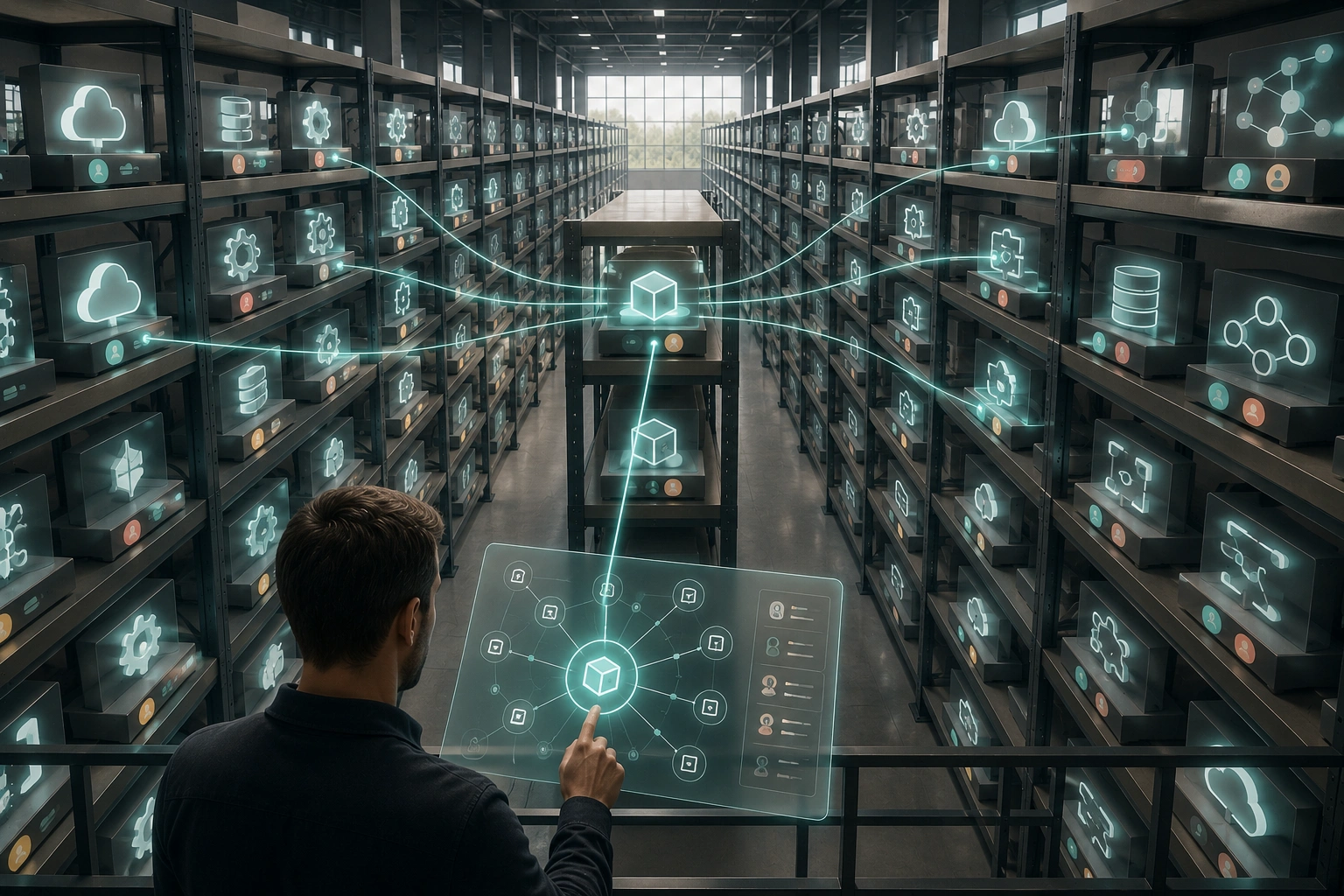
Station ii: Know what you actually have.
You cannot migrate, secure, or cost what you cannot see. Yet almost nobody could hand us a trustworthy list of their own integrations.
The gap costs more than it looks. One public-sector team measured about eight hours to build an integration, and thirty-two hours to find where its data lived and who owned it. Four times the cost of the work itself, spent just hunting for parts.
A line you cannot see is a line you cannot run.
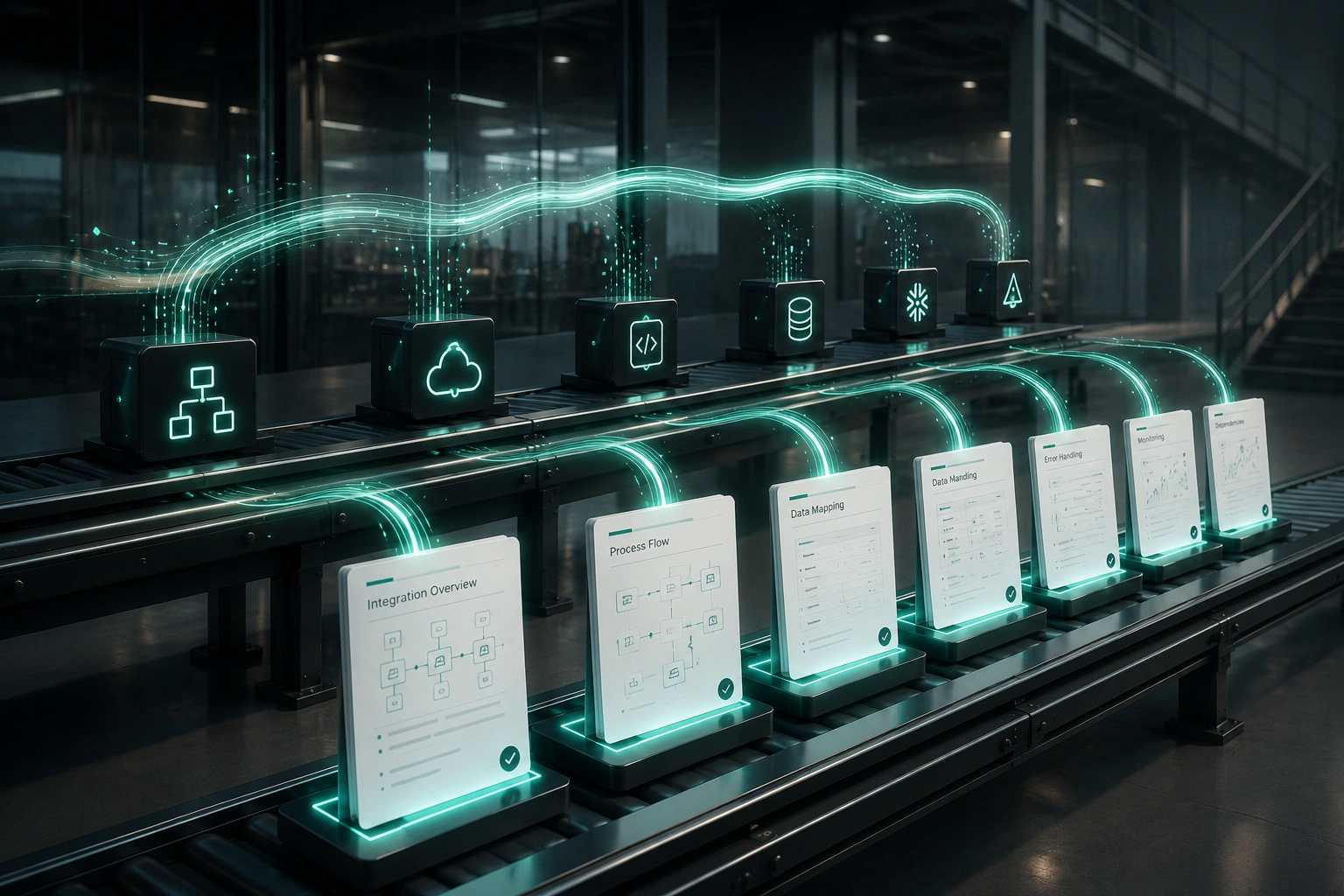
Station iii: Make documentation a by-product, not a project.
Nearly every team that kept documentation by hand gave up on it. They were right to. Hand-kept notes go stale. Stale notes cannot be trusted. So no one uses them, and no one keeps them up.
The teams that escaped did not type harder. They generated the documentation from the integrations themselves, so it stayed current on its own.
This is the trick that makes a good line work: the paperwork rolls off the belt as a by-product, not as extra shifts. It was the most common wish we heard, raised by roughly three in four teams.
The rule at station one only survives because station three makes it nearly free to keep.
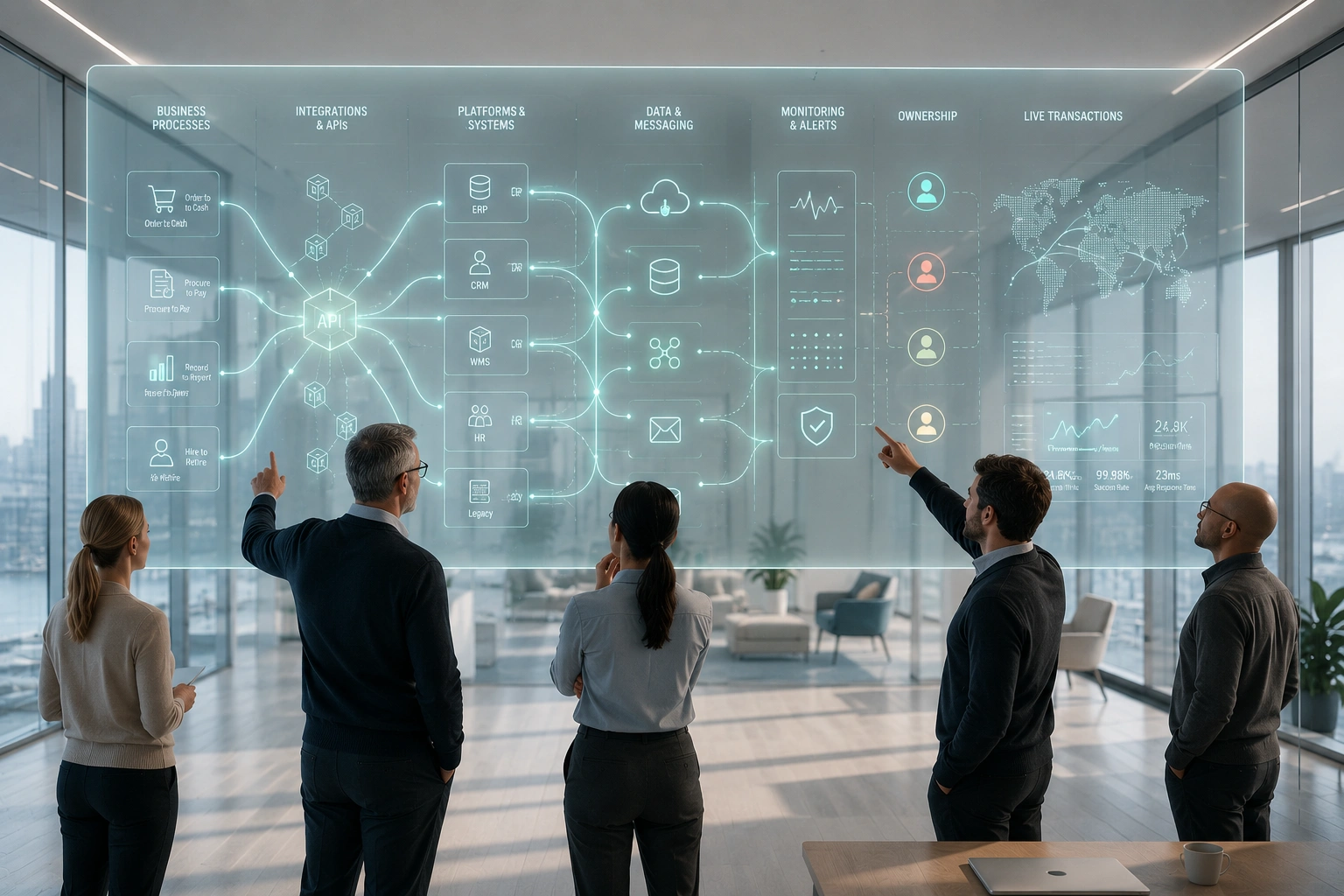
Station iv: Keep one connected picture.
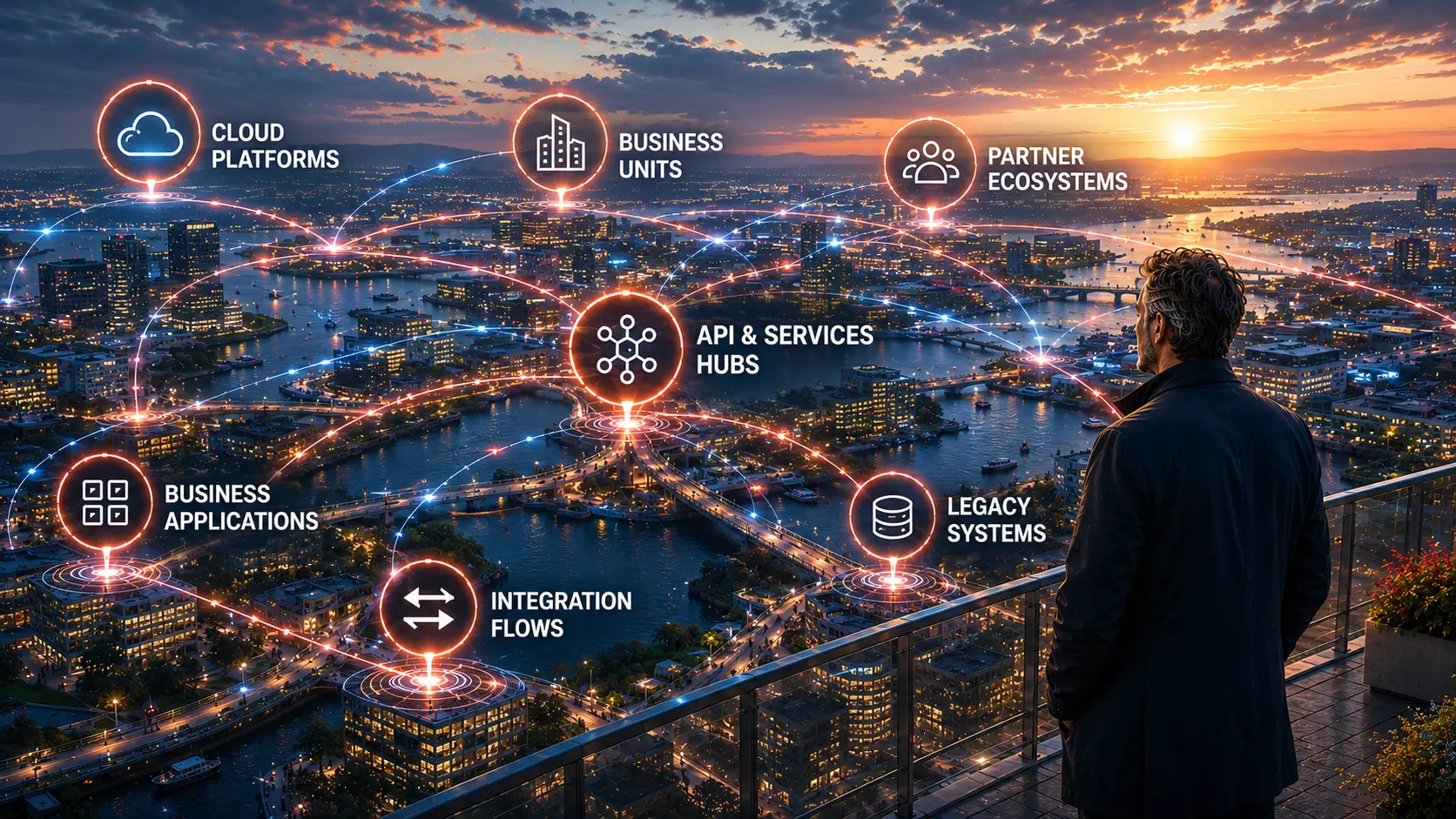
Most teams do not lack data. They lack one place to see it. The architecture lives in one person’s head. The monitoring lives in another tool. The business context lives in a slide deck from two years ago.
The calm teams link it into one live picture, from the high-level map down to a single transaction. Business and IT finally look at the same thing.
Ask them what they would lose without it and they all reach for the same image. It would be like losing their eyesight. You cannot run a line blind.
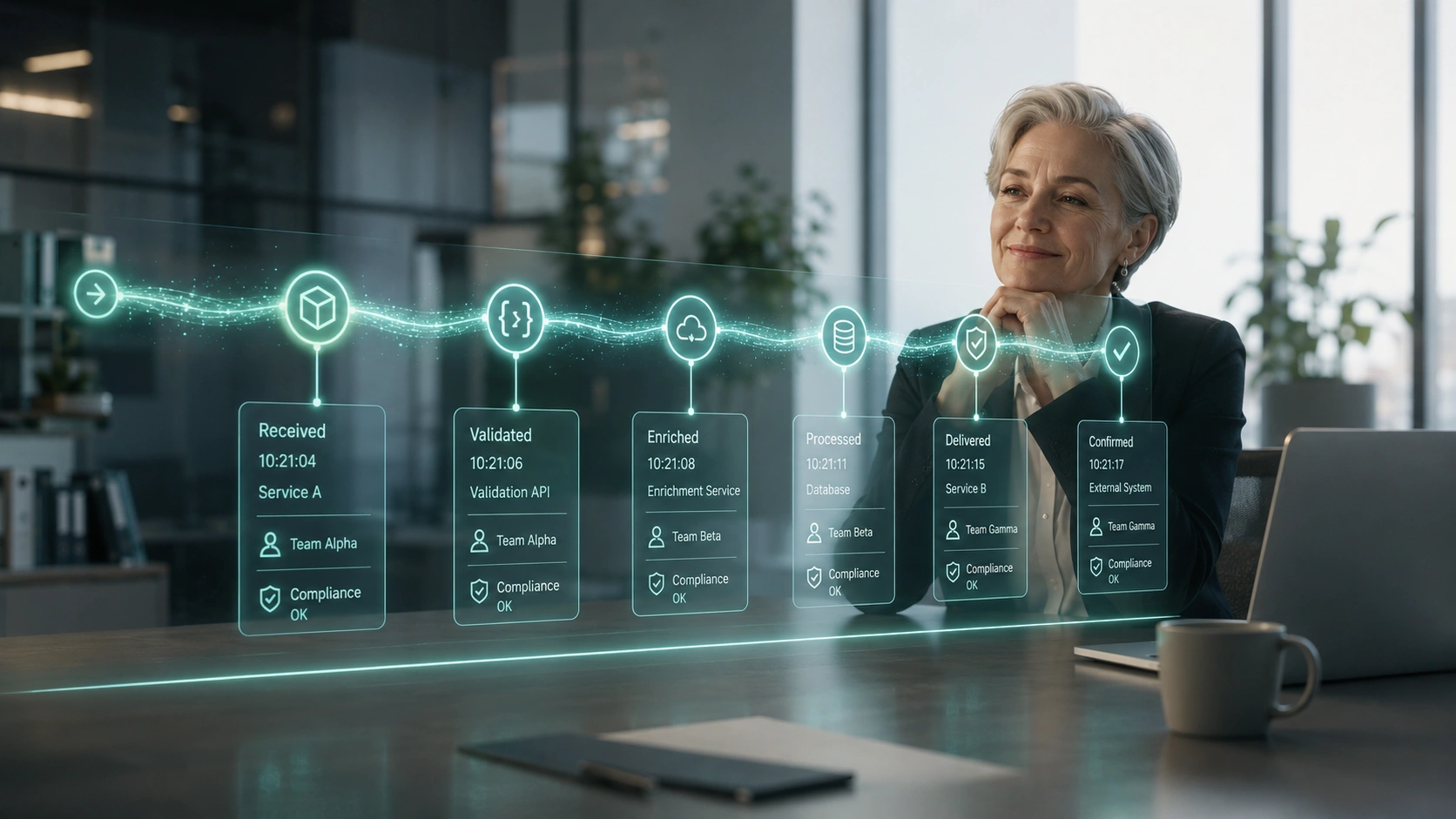
Station v: Be able to prove what happened.
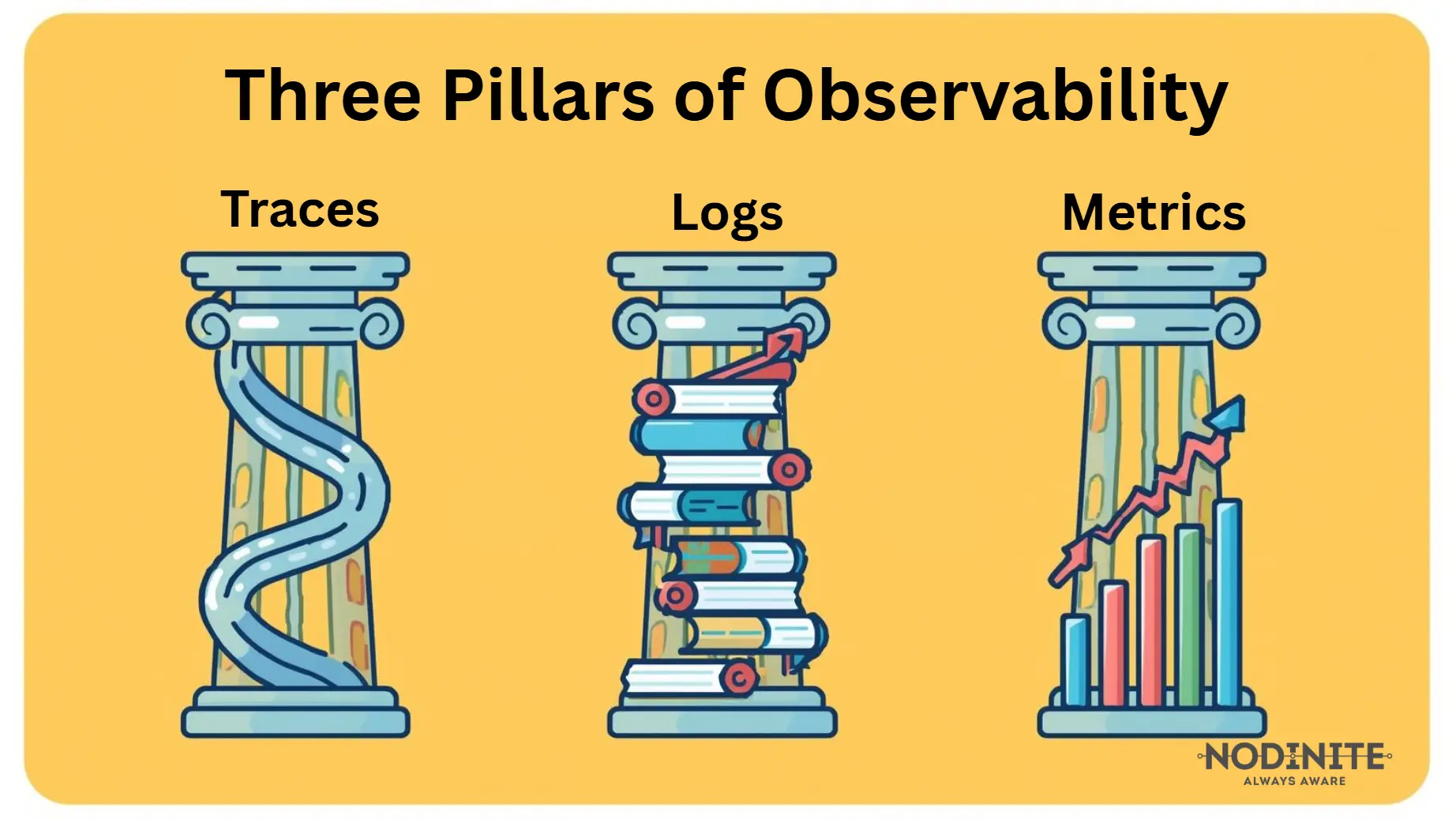
Not just an alert that something failed. A full trail of what ran, when, and which rules it followed.
This was the highest-valued capability in the whole study, scored around 9.6 out of 10. For about a third of the teams it was the main reason they invested at all, ahead of uptime.
With rules such as NIS2 and DORA, being able to show you are in control is moving from nice-to-have toward the price of entry. It is also the same clean trail you will want the day you point AI at your estate.
Read those five back and notice what is missing. Not one is a feat of genius. Each is a station someone set up and then kept running.
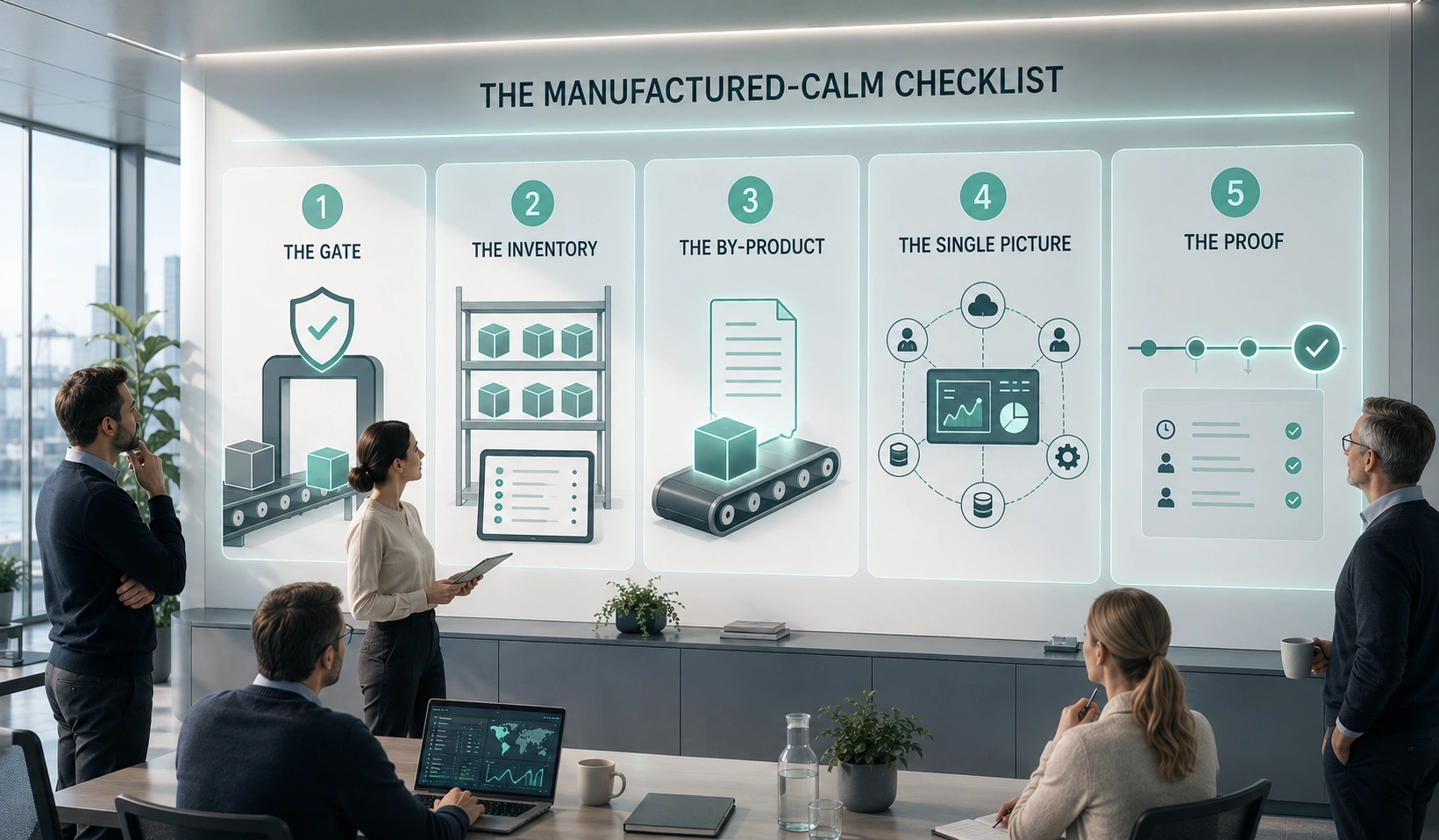
3. The Manufactured-Calm Checklist
You do not need to remember five paragraphs. You need five questions. Run your own team past them.
1. The gate: Does undocumented work actually get stopped before production, or do we just wish it would?
2. The inventory: Could we produce a trustworthy list of our integrations today, or would it turn into a project?
3. The by-product: Does our documentation update itself, or does it depend on someone finding the time?
4. The single picture: Can business and IT look at the same live view, or is it scattered across heads, tools, and old slides?
5. The proof: Can we hand someone the full history of one transaction in minutes, not a week?
A calm team can answer all five fast and without flinching. A firefighting team turns each one into a meeting.
Every “no” on that list is a station you have not built yet. That is not a character flaw. It is just an unfinished line.
4. So what do you actually do Monday morning?
Here is where most people stall. The list makes sense, and then the room fills with the same objection.
This sounds like an enormous programme nobody can fund.
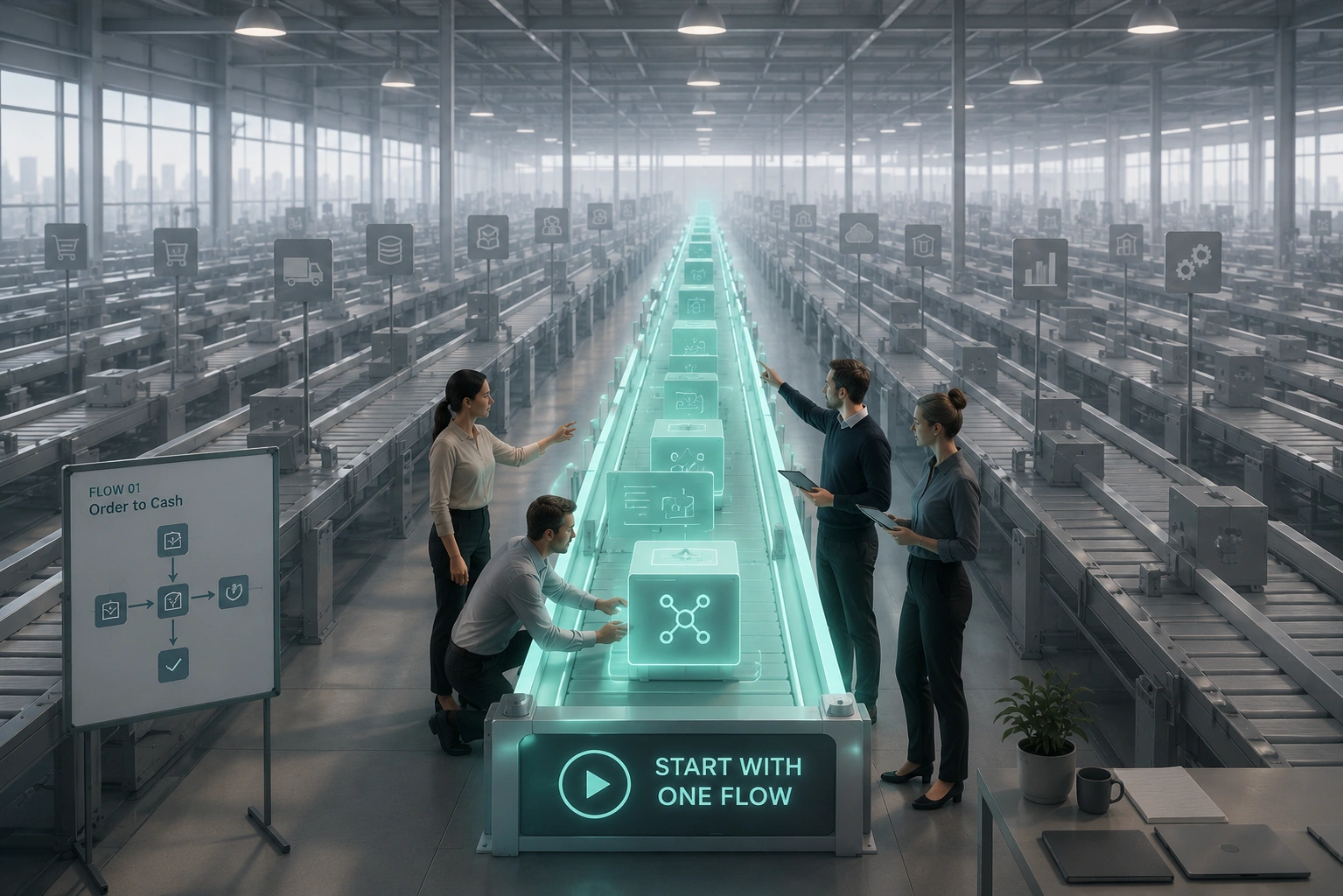
It is, if you try to build the whole line at once. The calm teams did the opposite. They did not shut the factory to retool it. They brought one flow into order first.
Pick one flow that matters. An order flow. An invoice flow. Run just that one through all five stations. The payoff from getting a single important system in order tends to show up almost at once.
Then do the next one.
The cheapest moment to start is during a change you are already making. A migration is the obvious one. You are already inside the system, already rewriting the business case, already running old and new side by side. Capturing the documentation, the monitoring, and the structure in that same pass costs a fraction of bolting it on later.
The best time to build the line was years ago. The next best is the next project on your roadmap.

5. What the calm is actually made of
If you run one of the firefighting teams, hear this plainly.
You are not behind because you are worse at your job. You are carrying the cost of a discipline that nobody ever named and decided to hold. That is not a flaw in you. It is an unmade decision. And decisions can be made.
The teams that made it do not describe the payoff in dashboards. They describe the first night they trusted what was running.
Not being the person woken at three in the morning to a fault no one can find. Walking into the audit already green. That is the real thing you are buying. And none of it depends on being clever.

6. The line in the sand
So here is the choice, drawn plainly.
On one side, calm is something you are given. The budget. The platform. The hire that finally makes the noise stop. People on that side wait a long time.
On the other side, calm is something you manufacture. One station at a time. Beginning with a single flow.
You can find out which side you are on in five minutes. Pick the integration that would hurt most if it failed tonight. Ask your team where its data is right now and who owns it.
If the answer is fast and certain, you have already built the line on that flow. If it turns into a meeting, you have just found the most valuable place to start building.
The calm team is not smarter than you. They just started the line first. You can start it today.