You Are Not Underfunded. You Are Invisible.
An integration team rarely loses the budget fight because its work is undervalued. It loses because the work is built to go unnoticed, and you cannot fund what you cannot see.
If you are the manager of an integration team, or in some way involved in the budgeting process, you know the meeting before it starts
It is budget season. Across the table sits the person who controls the number. A CFO, a finance director, a new CIO trying to understand where the money goes. The question arrives, reasonable and quietly hard to answer.
Why do you need eight people for that?
You have an answer. You always have an answer. The platform, the upgrades, the on-call rotation, the migration on the horizon.
The person nods. The number stays flat, or it shrinks. You walk out having defended the team and somehow having lost ground anyway.
Almost every manager leaves that room with the same conclusion.
We are underfunded. Next year, we fight harder!
It is the wrong diagnosis. And the wrong battle is exhausting, because you can win it and still lose.

1. You are fighting the wrong battle
Your team is probably not underfunded. Your team is invisible. Those are different problems, and only one of them is actually yours.
Underfunding is a number problem. You solve it by arguing for a bigger number. Invisibility is an evidence problem.
No number will fix it, because the budget-holder is not weighing your value and judging it too low. They cannot see your value at all.
So they do the only honest thing a person can do with a layer that looks quiet and costs eight salaries.
They ask why it costs so much. You cannot fund what you cannot see, and right now they cannot see you.

2. The work is built to go unnoticed
Integration belongs to a small family of functions whose whole purpose is that nothing happens. Security. Continuity. Safety inspection. Integration.
When they work, the day is uneventful, and a prevented failure leaves nothing behind to point at.
Integration is the quietest one, because the layer is designed to disappear.
When it runs, the orders flow, the alarms fire, the supplier files arrive, and the business goes about its day with no idea that any of it passes through something your team keeps alive by hand.
A service manager at a large industrial operator described it to us in passing. She was not bragging. She said it the way you describe a commute that quietly got easier.
Sometimes the business doesn’t even have time to see if something is wrong before we have already fixed it.
Read it again from the budget-holder’s chair. Her team watches a critical flow. The flow stumbles.
They catch it and repair it before anyone downstream feels a thing. The business never knew it was at risk, so the business never knew it was saved.
That is the trap. The better the team, the less anyone sees. The reward for preventing the fire is that no one believes there was ever a fire. Your skill is the thing that hides you.

3. A bigger budget would make it worse
Suppose you won. Suppose you walked out with two more headcount.
What changes for the people who hold the purse? Nothing they can see. The flows still run. The work is still silent.
Next budget season the question returns, sharper, because now it is ten people for a layer that, as far as anyone can tell, hums along on its own.
More money poured into invisible work just becomes a larger invisible cost. You have not changed the conversation. You have raised the stakes on one you keep losing.
Visibility is the cheaper lever, and it is the one almost nobody pulls. Making the work visible feels like marketing, and integration people did not get into this to do marketing.
They got into it to keep things running. So the work stays excellent, and silent, and quietly at risk.

4. Count the silent save
There is a unit of value your team makes almost every week and almost never records.
Call it the silent save: a problem caught and fixed before the business felt it.
Every silent save is a disaster that did not happen. A late order that still shipped on time. A compliance report that came out right. A broken integration fixed in the gap between the failure and the fallout.
Counted, the silent save is the strongest number you can bring to a budget meeting. Uncounted, it never happened.
That is the whole reframe. Stop reporting what the team does. Start recording what the business would have lost without it.
You do not need a long dashboard.
Five measures carry almost all the weight.
The Silent-Save Scorecard:
- Coverage: How much of your revenue- and compliance-critical work is watched, versus running blind.
- Exposure: How long the business is at risk when a critical flow breaks.
- Saves logged: How many silent saves you recorded last quarter.
- Key-person risk: How many flows become a crisis if one person leaves next month.
- Audit trail: Can you hand an auditor the full history of one transaction in minutes, not a week?
None of this needs a new tool. The evidence already lives in the systems your team runs. The discipline is deciding to surface it, in the language of the people who fund you, before you need it.

5. Make it a standing view, not a rescue mission
The managers who escape this trap are not louder and not more political. They add one small ritual: a short, regular slot, quarterly is enough, where the integration practice shows the rest of the business what it caught, what it changed, and what is coming.
Not a status report buried in a ticket queue. A plain-language view of the layer that holds the business together. What broke and was caught before it spread.
Which critical flows are covered now that were blind last quarter. Where the key-person risk still sits.
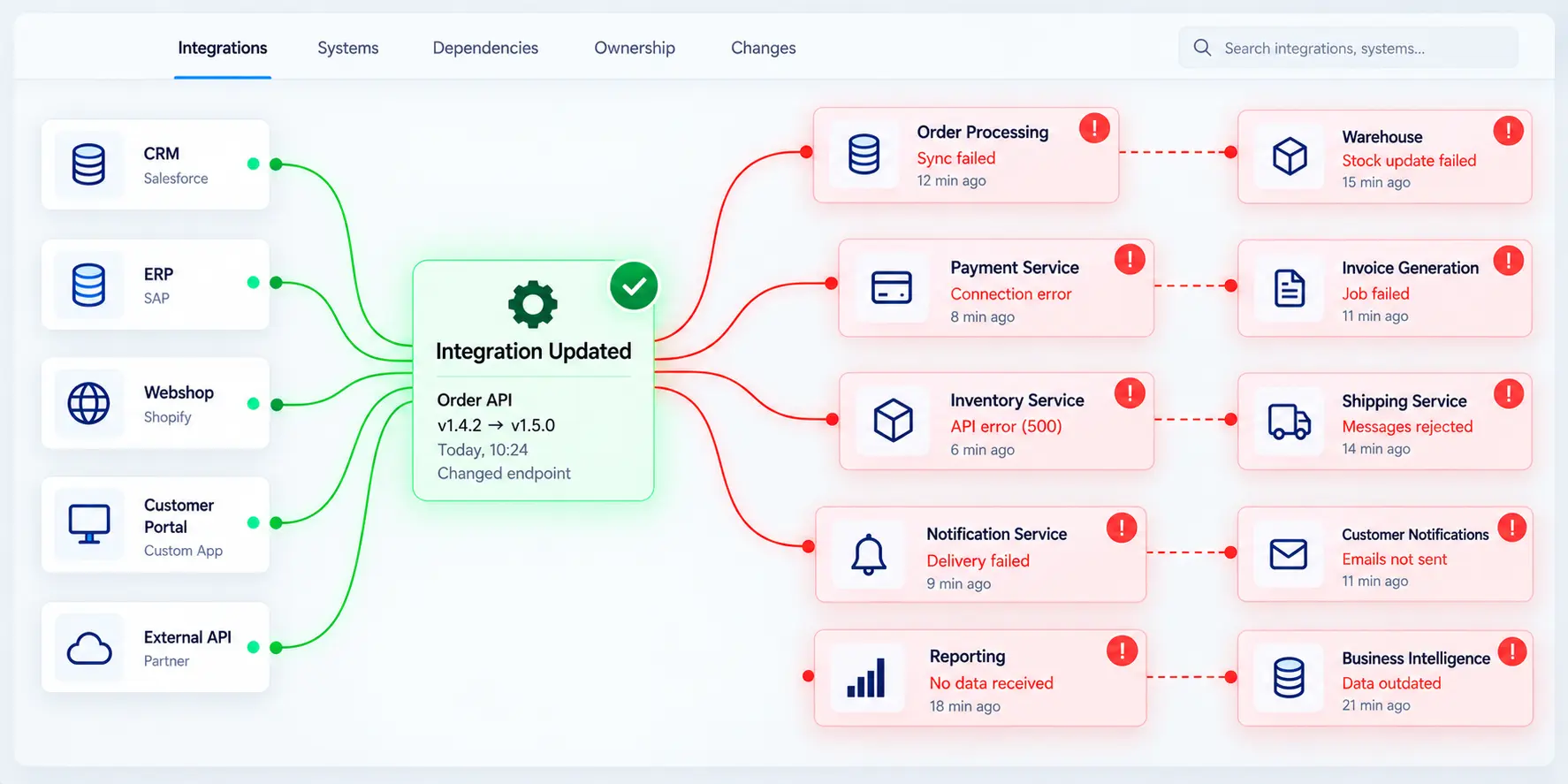
We have watched this change the relationship. At one large construction group, the same operational view is now read across the business, most of its readers outside IT.
The integration team stopped being the help desk for “did this go through” and became the function the business consults. The platform did not change. The visibility did. And the budget conversation stopped being a fight.
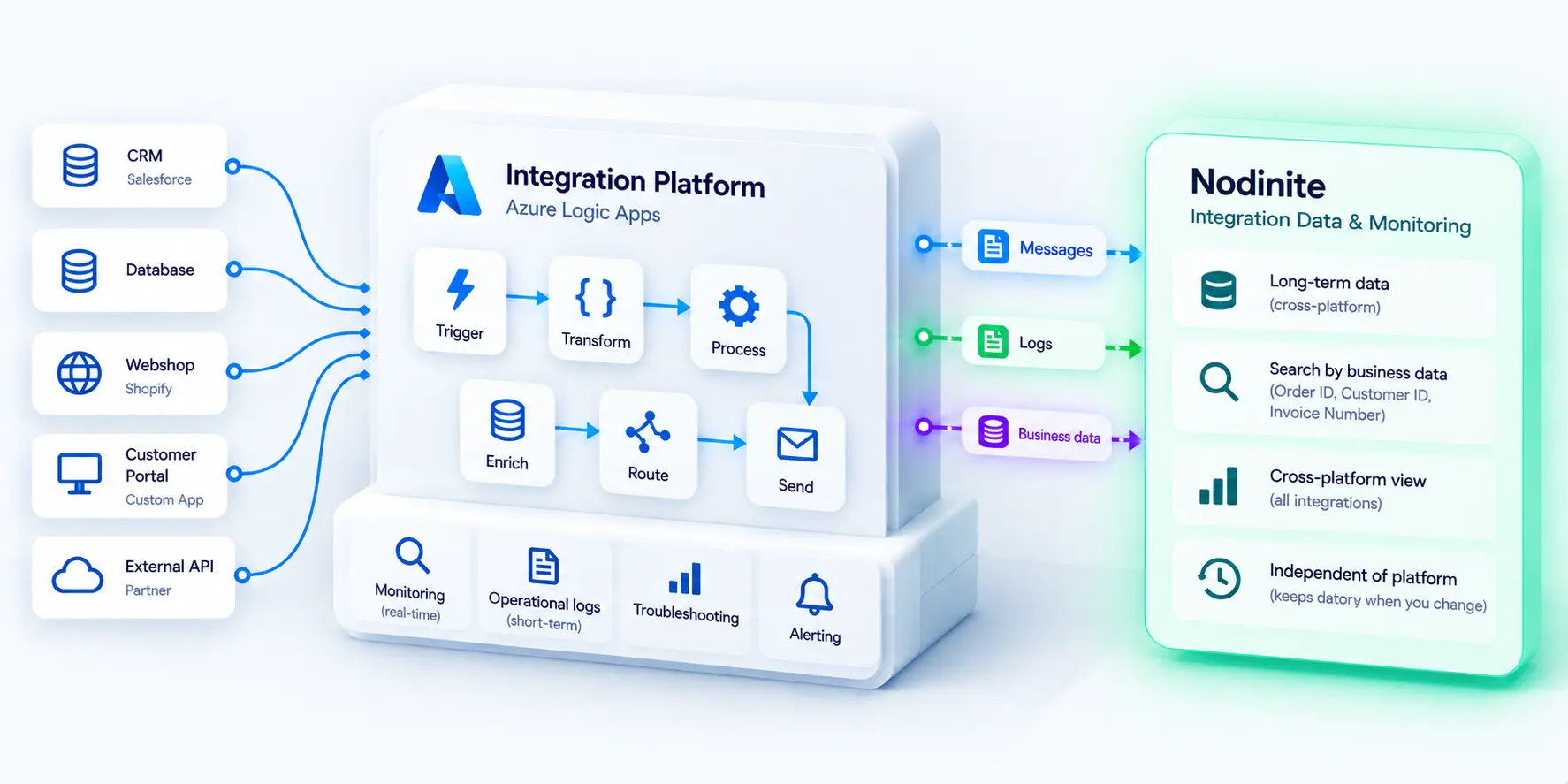
This holds whatever you run on. Azure, on-premise, a hybrid estate, a partner operating it for you, one platform or several stitched together.
The principle is independent of the stack. The choice of tools is yours. Surfacing the silent save is the part that moves the budget meeting.

6. You are not asking for a favour
So go back to that meeting in your head. The eight people. The flat number.
You were never underfunded in the way you believed. You were running one of the most consequential layers in the company and doing it so well that no one could see it.
That is not a weakness to apologise for, and you are not bad at the politics. The value was structurally hidden, and making it visible was never anyone’s job until now.
This is what the budget meeting is really asking of you. Stop walking in as the cost centre defending its headcount. Walk in as the person who manages a risk the business can finally see. Same team, same eight people, a completely different conversation.
Here is the line, drawn plainly. There are two kinds of integration manager now.
One believes that keeping the work excellent is the whole job, and keeps walking into budget meetings to be judged on a value no one in the room can see.
The other has decided that showing the work is part of the work, and never again lets a silent save go uncounted. The first is more skilled, and will keep losing. The second has ended the fight.
You do not need to fight harder for budget. You need to make the silent save visible, in their language, before the day a flow finally breaks in public and the conversation happens without you in the room.
Do that, and the question stops being “why eight people.” It becomes “what else are you keeping safe that we never knew about ?”
Start with one. Take a single silent save from last month and put a number on what it would have cost if no one had caught it. That one line, in business language, will tell you more about your next budget meeting than any headcount argument ever has.